
Photovoltaics must do more than capture sunlight: they must convert it efficiently, for a long time and at an acceptable cost. The study of 1 October 2026 addresses the first challenge while tackling material quality. Its significance becomes clearer when a laboratory result is distinguished from equipment installed on a building.
Two layers to make better use of light
A tandem architecture combines materials with complementary properties. In the devices studied, perovskite is paired with an organic cell. This differs from perovskite–silicon tandems: results from one approach should not be attributed to the other.
Nature’s presentation explains that the researchers worked on crystallisation uniformity and the segregation of halide components, two difficulties that limit the performance of these perovskites. It reports 28.20% conversion efficiency for the tandem. This is the result reported in this study, not a universal record for every solar technology.
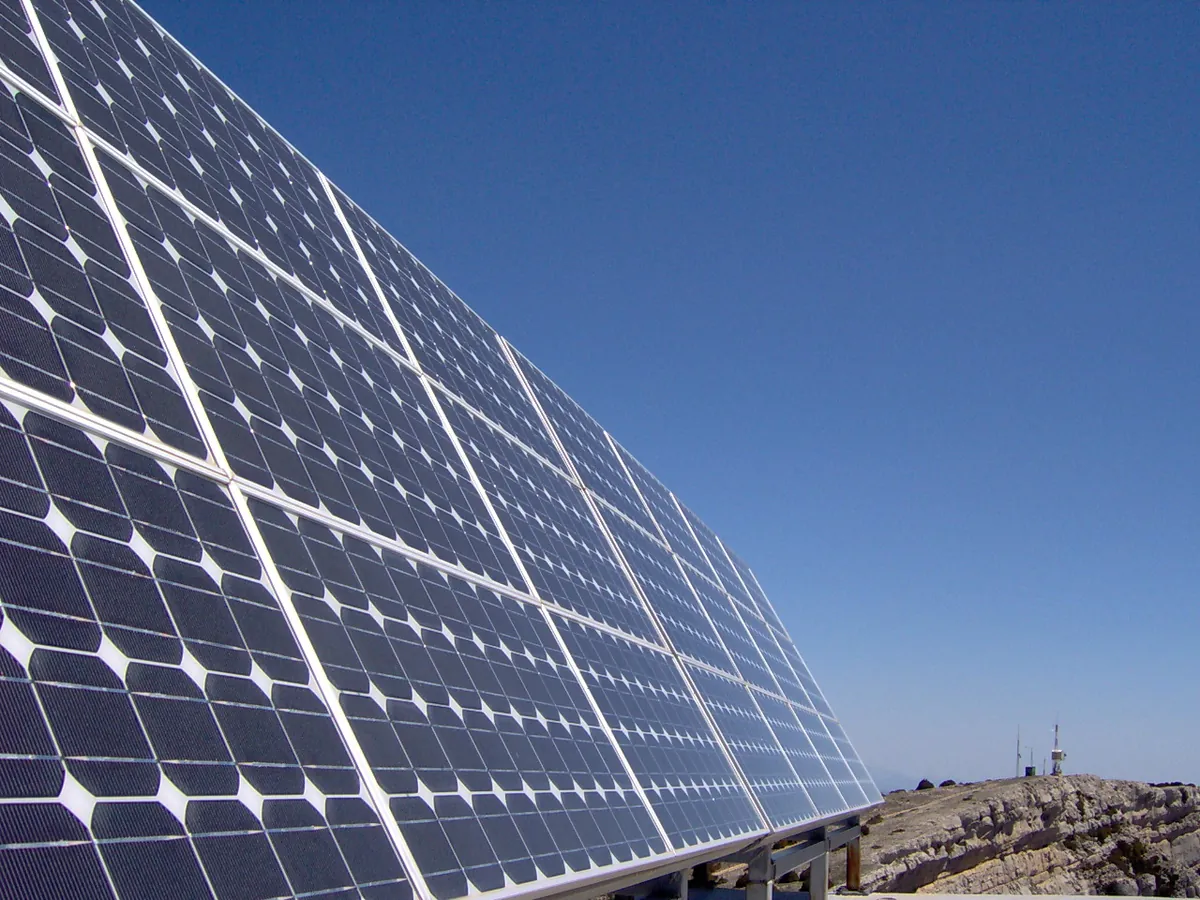
Efficiency does not tell the whole lifetime story
The number describes conversion performance under the measurement conditions used. On its own, it does not indicate how many years a panel will generate electricity while exposed to sunlight, moisture and changing temperatures.
Another study, published in EES Solar in 2026, examines degradation in wide-bandgap perovskite absorbers. It identifies operational stability as a significant obstacle to commercialisation. This separate work provides scientific context; it does not replicate Zhu and colleagues’ new experiment.
A possible benefit: more power from limited space
Our analysis: more efficient devices with sufficient durability could benefit buildings with limited roof space. But a high-performing cell does not guarantee that a module assembled from it will achieve the same result, or that manufacturing will be cost-competitive.
For households and businesses, the decisive measure will remain electricity actually generated over time relative to total costs. An innovation that raises efficiency but complicates production or shortens service life could lose some of its advantage. The announcement supplies no quantified saving applicable to a household installation.
The steps to watch before panels reach rooftops
The next questions concern reproducibility, manufacturing over larger areas and performance outdoors. These criteria help assess a technology without treating every scientific publication as a commercial launch.
This result opens a route for tomorrow’s solar power. Its industrial value will depend on bringing efficiency, stability and controlled manufacturing together in one product. For readers, this is a research advance; its impact on everyday life remains to be demonstrated.


Comments 0
Be the first to comment on this article.