A material that is not entirely inert
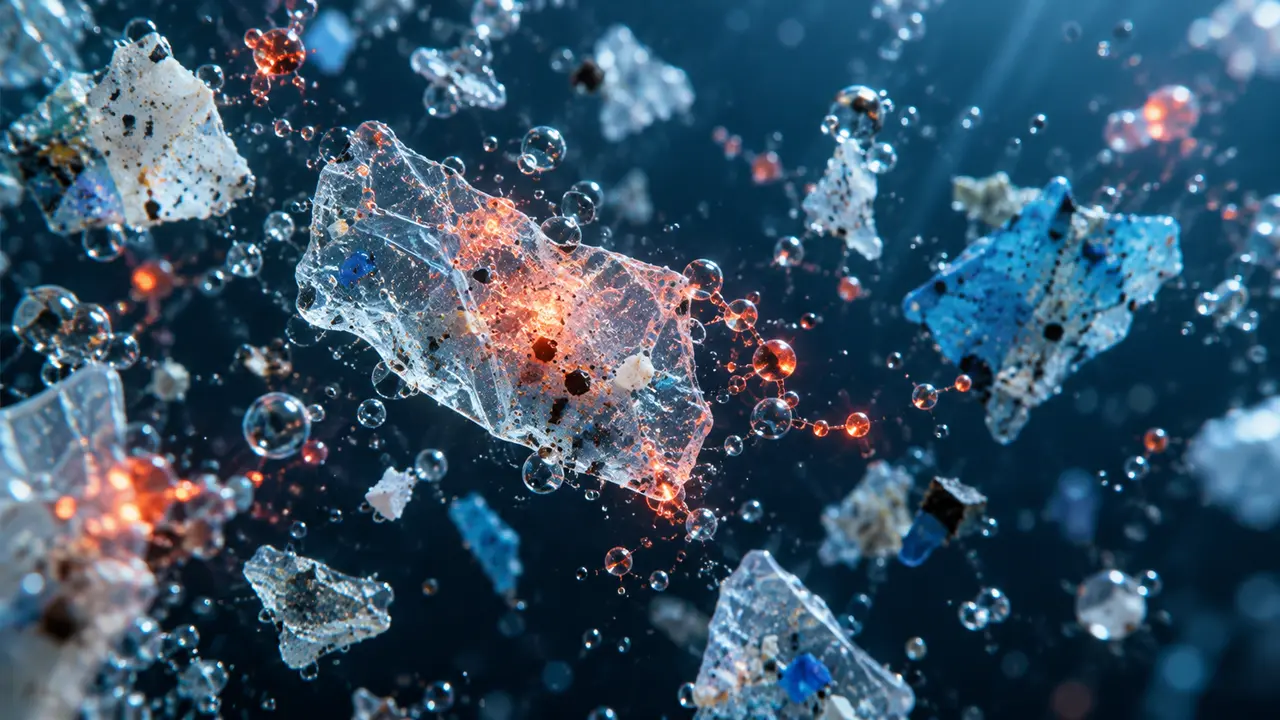
Bulk plastic generally resists chemical reactions, which explains its widespread use in packaging and bottles. When it fragments, however, the surface exposed to the environment increases sharply. Naixin Qian, Wei Min and colleagues at Columbia University and the University of California, Berkeley examined this boundary between particles and water.
Using several spectroscopic methods and molecular simulations, the researchers observed electron transfer at the interface. It produces reactive oxygen species, or ROS: high-energy molecules that can damage proteins, lipids, RNA or DNA when they overwhelm an organism’s antioxidant defences.
Common plastics in several experimental media
The experiments included polystyrene, polyethylene and PET. Reactions were detected in water, blood serum and cell cultures. The effect grew with available surface area: for the same mass, small particles provide more contact zones than an intact object.
This is a general physicochemical mechanism, not a measurement of an individual’s exposure, a dangerous dose, or the risk posed by one bottle or meal. Disease has many causes, and epidemiological associations involving microplastics do not establish that the ROS identified here are responsible.
What still needs to be verified
Researchers must now determine which particles reach human tissues, how long they remain, how ageing, additives and size alter the reaction, and whether biological defences neutralise ROS at realistic concentrations. Comparable protocols across laboratories will be essential.
For regulators and manufacturers, the work supports measuring not only the amount of plastic but also its surface, composition and reactivity. It could guide materials that fragment less and water treatment that removes the smallest particles.
Conclusion
The study adds a credible piece to the microplastics toxicity puzzle: water can actively participate in their chemistry. It warrants neither panic nor claims of absolute personal prevention. Its immediate value is to make research more precise and waste reduction more rational.


Comments 0
Be the first to comment on this article.