Reaching the cells left behind
Glioblastoma is aggressive. Surgery removes as much tumour as possible, followed by radiotherapy and chemotherapy, but the blood-brain barrier blocks many molecules and a locally placed drug may remain concentrated close to its outlet.
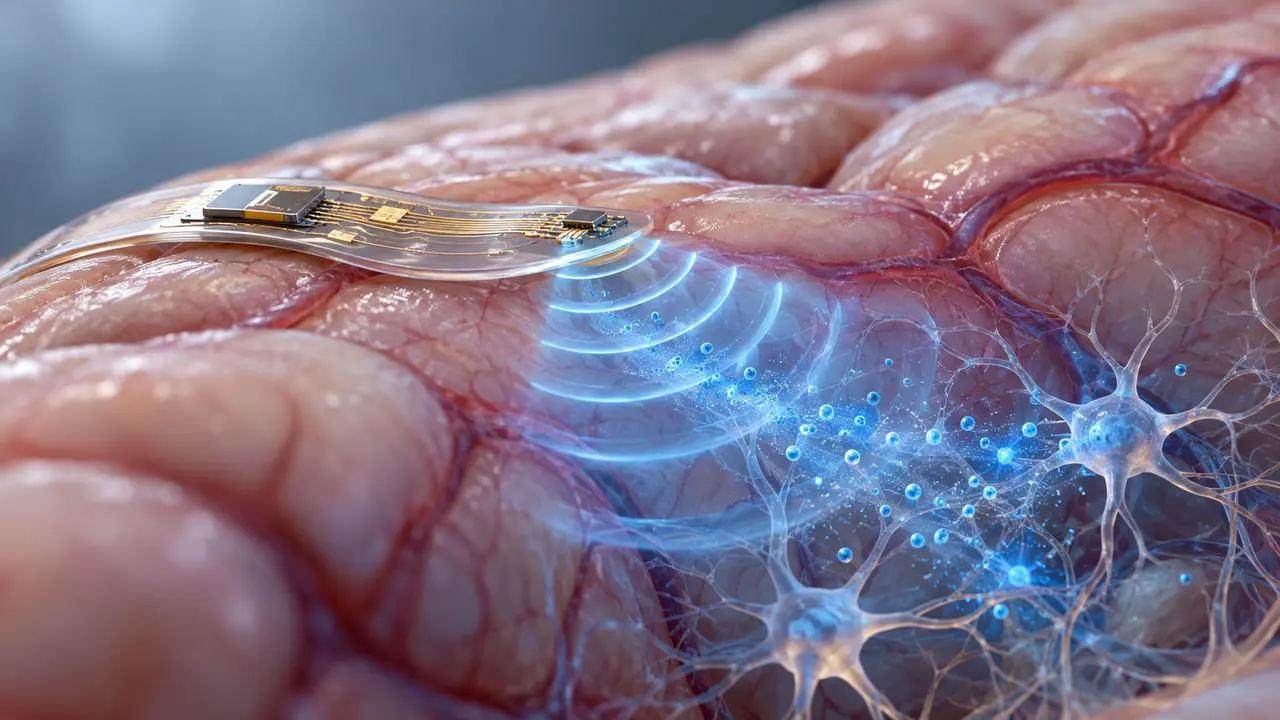
Canan Dagdeviren’s MIT team integrated an infusion channel with 24 miniature transducers. Ultrasound oscillations create local movement that widens distribution, while an osmotic pump slowly supplies about 100 microlitres of fluid. A wireless controller adjusts the ultrasound programme, and the battery can be recharged wirelessly.
A preclinical result, not a treatment
In a material that mimics tissue, molecules travelled farther with ultrasound than without it. In mice, an MRI contrast agent also covered a wider area when the transducers were active.
These tests demonstrate distribution, not a cancer cure. They do not yet establish long-term safety in the human brain, compatibility with a particular cancer drug, the risks of heating, infection or tissue injury, or the best ultrasound dose.
Why programmability matters
An implant placed during surgery could theoretically deliver several sequences near the surgical cavity. Programming would offer finer control than passive diffusion. A sufficiently effective local dose might reduce exposure of other organs, but that benefit has yet to be measured.
Next steps include longer animal studies, biocompatibility tests, reproducible manufacturing and regulatory review before any clinical trial. The drug still matters: spreading it farther does not guarantee that it will kill tumour cells.
Conclusion
LUCID combines local infusion and miniaturised ultrasound in a thoughtful way. It is a promising experimental platform, not a current therapeutic option. Its value will depend on turning wider distribution into clinical benefit without adding unacceptable risk.



Comments 0
Be the first to comment on this article.