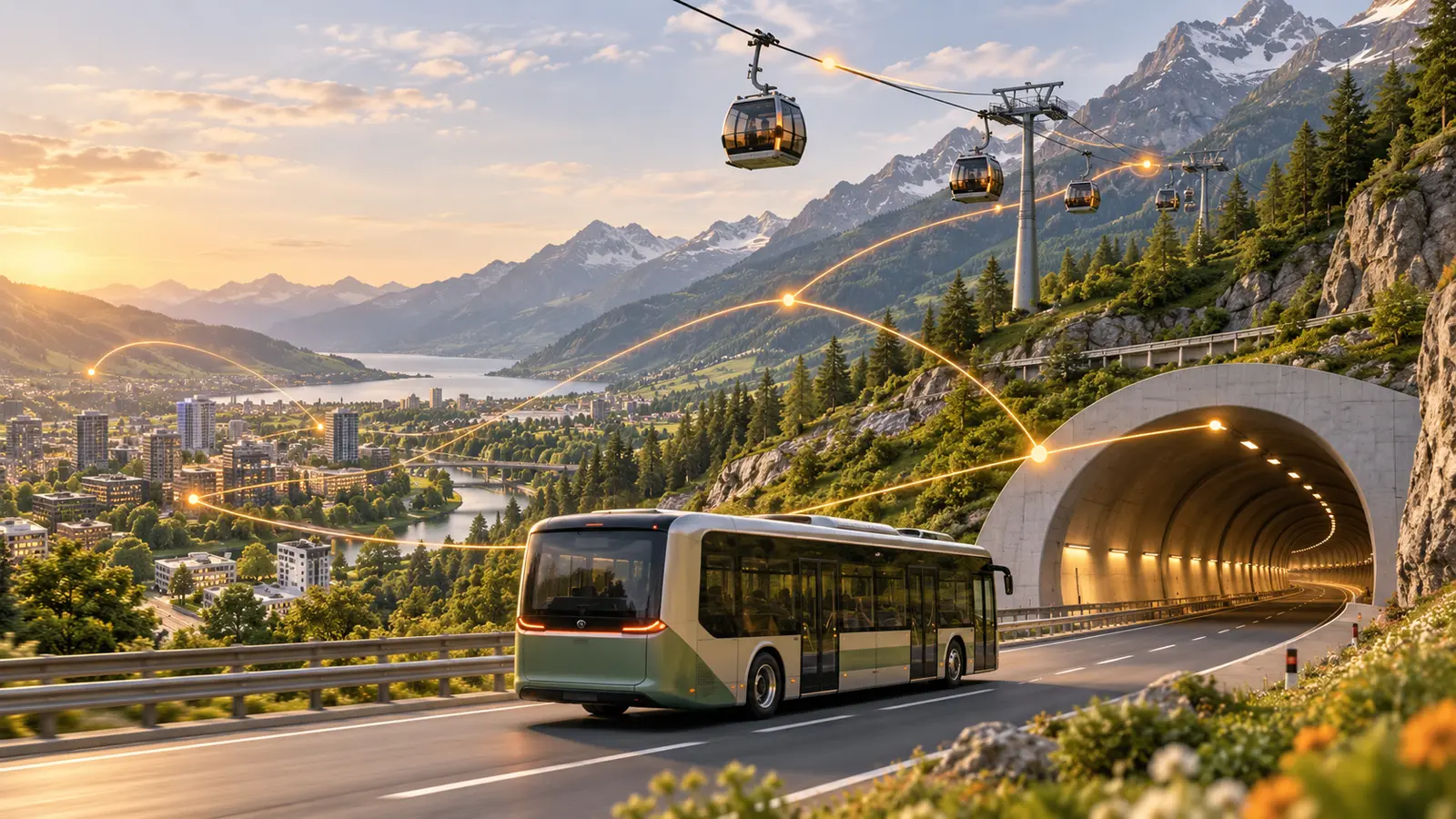
An electric car is visible. The skills, infrastructure and industrial exchanges that make new mobility possible are much less visible. The announcement during Swiss President Guy Parmelin’s visit to India illustrates this second dimension of innovation: circulating knowledge as well as people.
Several technologies, a framework still to implement
The official list published by the Indian government identifies cooperation between Switzerland’s Federal Department of Economic Affairs, Education and Research and India’s Ministry of Road Transport and Highways. The fields mentioned include electric vehicles, cable transport, the circular economy and tunnels.
DD India reports these elements in its 5 October account. This is a cooperation framework aimed at sustainable infrastructure, not a list of funded works or an announced vehicle rollout with specified volumes and dates.
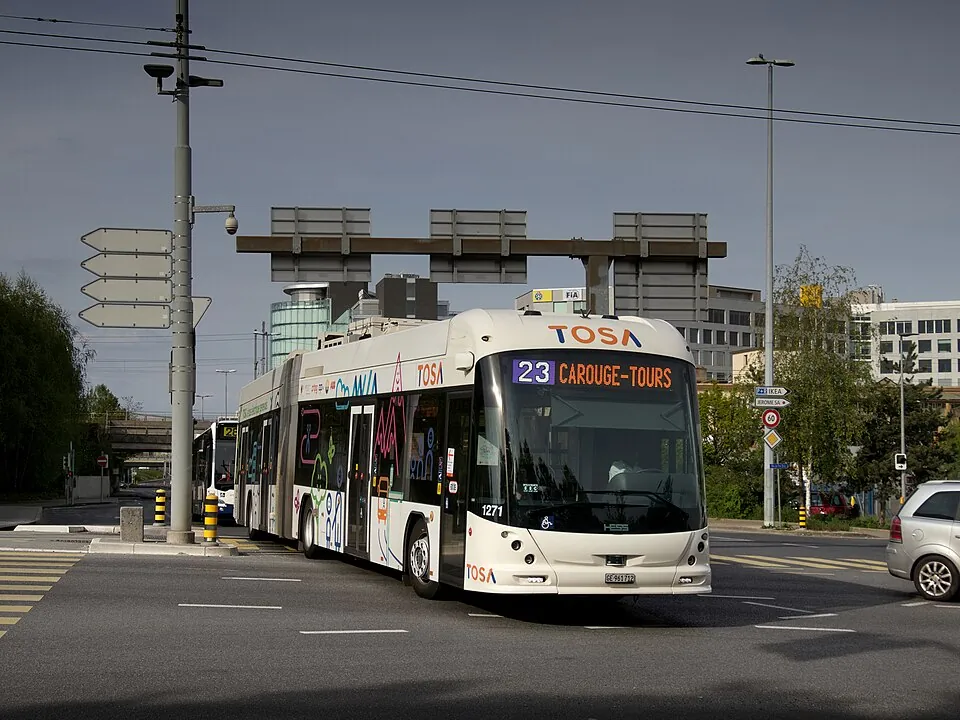
Innovation also goes through laboratories and start-ups
The visit includes other instruments concerning research and technology transfer. The Indian document mentions a letter of intent involving its Department of Science and Technology and the Swiss National Science Foundation, as well as an arrangement with Zurich University of Applied Sciences around the Indo–Swiss Academia–Industry Training programme.
The latter targets start-ups through exchanges, workshops and networking opportunities. Swiss authorities also confirm the place of education and research in the 5 October discussions. These instruments have distinct scopes; they are not one unified programme whose results are already assured.
For travellers, effects will depend on local projects
Our analysis: considering vehicles and infrastructure together can prevent the transport transition from being reduced to a change of propulsion. However, technology suited to one territory is not automatically suitable elsewhere. Choices must account for usage, maintenance, safety and costs.
For residents, the useful consequence would be a service that actually improves their journeys. The agreement does not yet promise that outcome or identify the cities and regions that would benefit. The next steps to watch are project identification, financing and assessment of the service delivered.
For businesses, a starting point rather than a guaranteed market
Collaboration could bring scientific expertise closer to industrial needs. It may also create new demands for training and coordination. No job creation or emissions reduction figure can be inferred from the memorandum alone.
The value of this cooperation lies in its scope: mobility, research and technology transfer. Its impact will be judged when identifiable projects reveal what changes for travellers and professionals. A signature opens a possibility; transforming daily life still requires implementation.



Comments 0
Be the first to comment on this article.