The triangle exposes a design problem
When a heavy truck stops on the shoulder or roadway, US regulations normally require the driver to place reflective warning devices at specified distances. This simple action protects approaching vehicles.
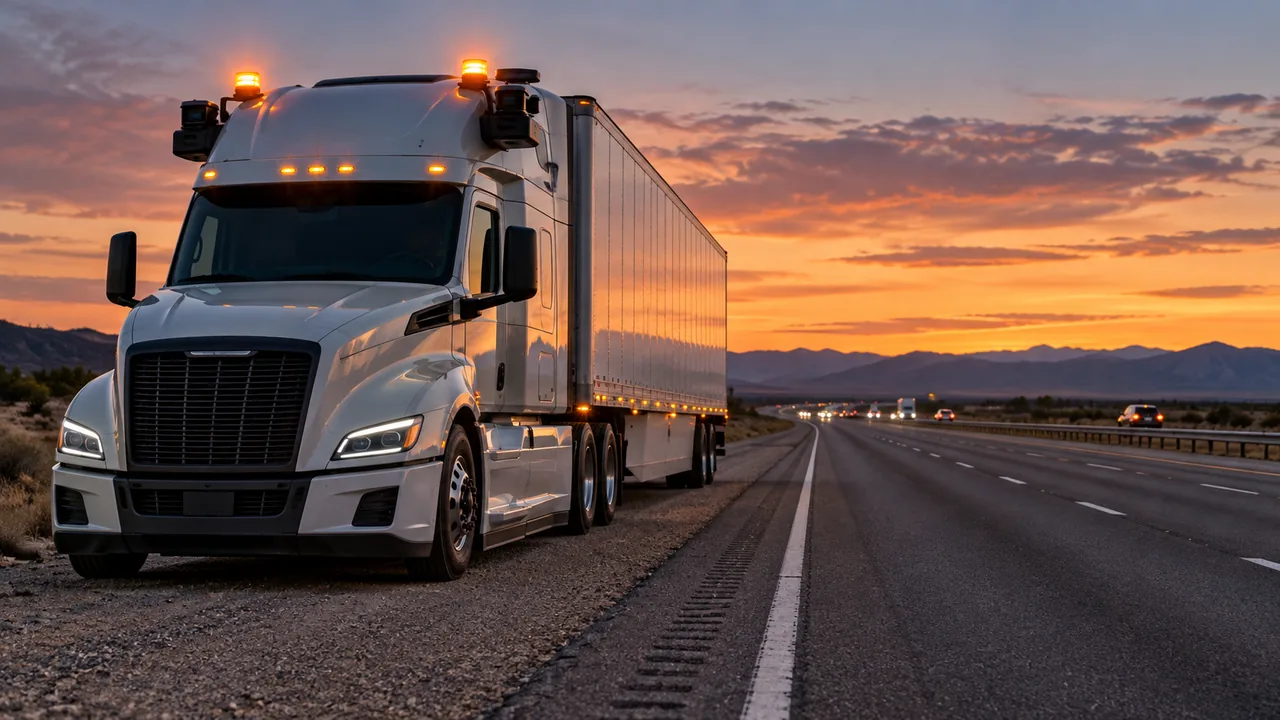
A Level 4 autonomous system can drive without human intervention within its intended conditions. It cannot climb out of the cab and walk down the road. Aurora therefore proposes high-mounted warning beacons that are visible without outside intervention.
The US Department of Transportation says the exemption is limited to five years and applies to vehicles fitted with the specified autonomous system. Operators must notify the authorities and report crashes involving this equipment. The authorisation can be revoked if the required safety level is not maintained.
A decision following years of debate
Waymo and Aurora sought a broader exemption in 2023. At the time, authorities considered the evidence insufficient to establish equivalent safety across the industry. Aurora subsequently filed a specific application and obtained a temporary exemption before the current decision.
The process shows how innovation enters the legal framework: a proposal, evidence, public comments, a limited scope and monitoring requirements. The exemption does not mean every autonomous truck can discard triangles. It establishes a controlled framework for one particular solution.
The real test is visibility in poor conditions
A beacon mounted on the cab may be visible earlier than a triangle on the ground. A bend, hill crest, fog, heavy rain or the truck’s position may also affect it. Safety will depend on brightness, viewing angle, electrical reliability and the system’s ability to signal a breakdown immediately.
Preventing a collision further upstream matters too. A stationary autonomous truck must communicate its location to the supervision centre, emergency services and, where standards allow, other vehicles. The beacon is only the visible part of a response chain.
What it changes for road freight
Aurora already operates around twenty autonomous trucks, according to Reuters. The company describes the decision as a step towards broader commercial operations. Expected gains concern vehicle utilisation, journey consistency and long motorway routes.
Employment effects will be gradual. Early deployments remain limited to certain roads and require maintenance, supervision and response teams. Drivers could focus more on complex, urban or terminal journeys, while some repetitive routes are automated.
The most useful question is therefore not whether the truck “drives itself”, but how the entire ecosystem reacts when it stops, encounters an unexpected event or leaves its operating domain. An innovation becomes reliable when its failure procedures are as robust as its successful demonstrations.



Comments 0
Be the first to comment on this article.