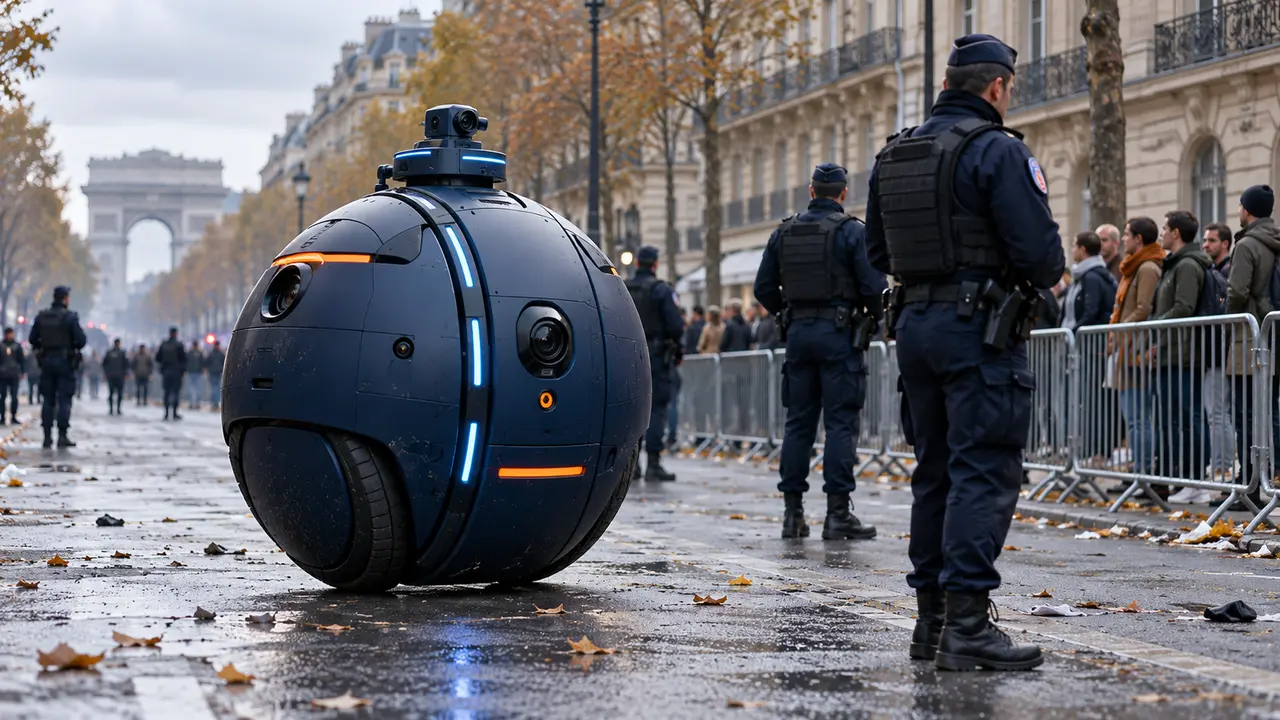
A machine rolling through a demonstration creates two opposing narratives: keeping officers away from danger, or normalizing intimidation and surveillance. Technical reality requires a distinction between prototype, demonstration and operational service.
Useful mobility, not magic
A spherical shell can protect sensors and cross cluttered ground. It may carry cameras, lighting, safety loudspeakers or thermal sensors. Weight, battery life, stability and people avoidance remain major constraints.
A heavy robot must never be used to charge a group: collision, crushing and panic risks would create another danger. A reasonable mission is to inspect an empty or evacuated area, check a suspicious object and guide responders.
Humans must retain the decision
A security robot cannot understand intent or political context. A sudden movement may be escape, assistance or assault. The machine may transmit information; it should not decide on intervention.
Credible rules require continuous human control, emergency stop, low speed near people, action logs and visible identification of the responsible authority. Any coercive function needs a separate legal debate.
Trust is the real test
Independent trials must measure collisions, link failures, detection errors and public reactions. Recorded data must be limited, secured and retained only as long as the law allows.
Robotics can reduce responders’ exposure, but it cannot solve the causes of a protest or responsibility for force.
Conclusion
Spherical robots may become useful scouts in damaged environments. Their legitimacy depends on a clear choice: unarmed, controlled assistance rather than an autonomous machine sent against a crowd.
Comments 0
Be the first to comment on this article.