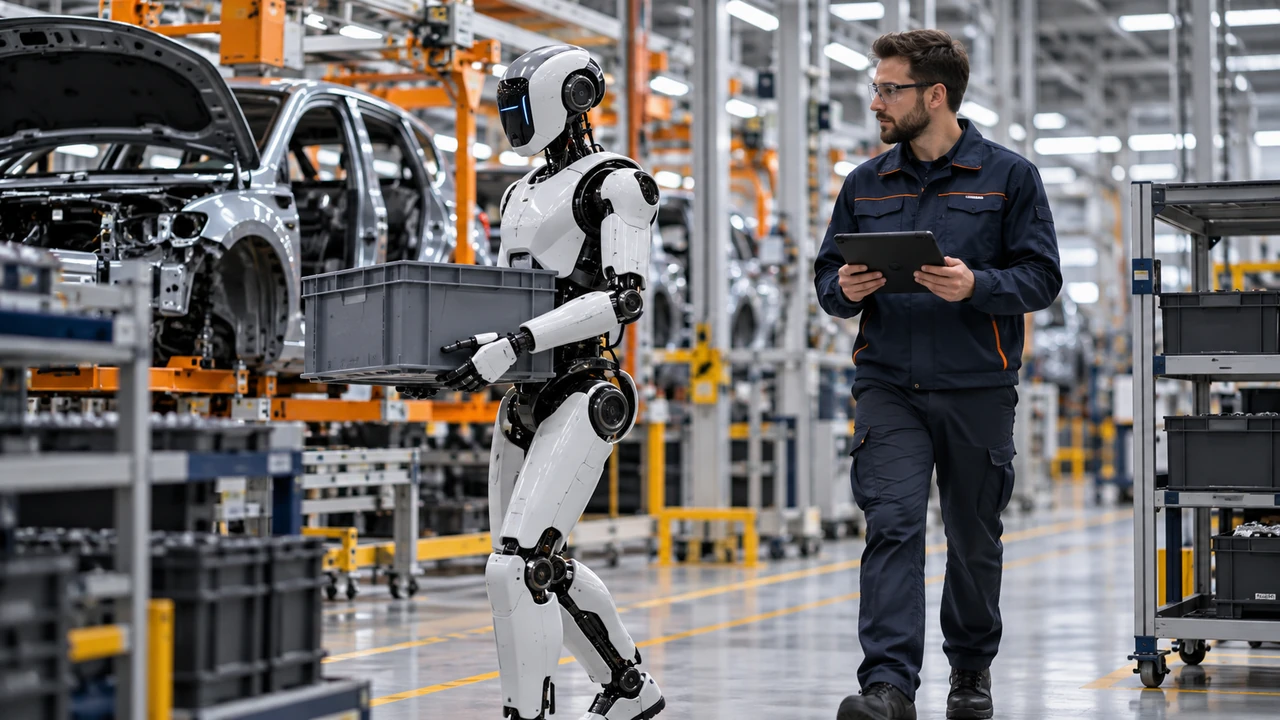
Videos of robots running, dancing and manipulating objects are multiplying, yet their real economic presence remains limited. Global figures now reveal the gap between spectacular demonstrations and industrial deployment.
A market can finally be measured
On 30 September 2026, IFR reported around 7,000 full-size humanoids taller than 140 centimetres sold worldwide in 2025. The same report counts almost 250,000 professional service robots in 2025, up 24%. The figure of 542,000 industrial robot installations refers to 2024: the categories and years differ.
These volumes describe a market that remains limited. Industrial, service and humanoid robot categories should not be added together without checking their statistical scope.
Many are still test platforms
A large share are used by laboratories and companies to develop software, collect data and evaluate behaviour rather than perform regular work.
Car makers are interested because a humanoid could use human aisles, tools and workstations without rebuilding a factory.
Very practical obstacles
Battery life, reliable hands, stability, speed and reactions to unexpected events remain major problems. A prepared demonstration is not an eight-hour shift.
Safety is equally central: a powerful machine near people must limit force and remain predictable when something fails.
Work will change gradually
Near-term uses will mostly be pilots for light handling, line supply and repetitive or hazardous work.
They will also create supervision, maintenance and training roles; employment effects will depend on work organisation as much as technology.
Conclusion
The humanoid market exists but remains embryonic. Seven thousand sales are a starting point, not proof of maturity.
The real change begins when robots perform useful work reliably, safely and at a competitive cost.
Comments 0
Be the first to comment on this article.