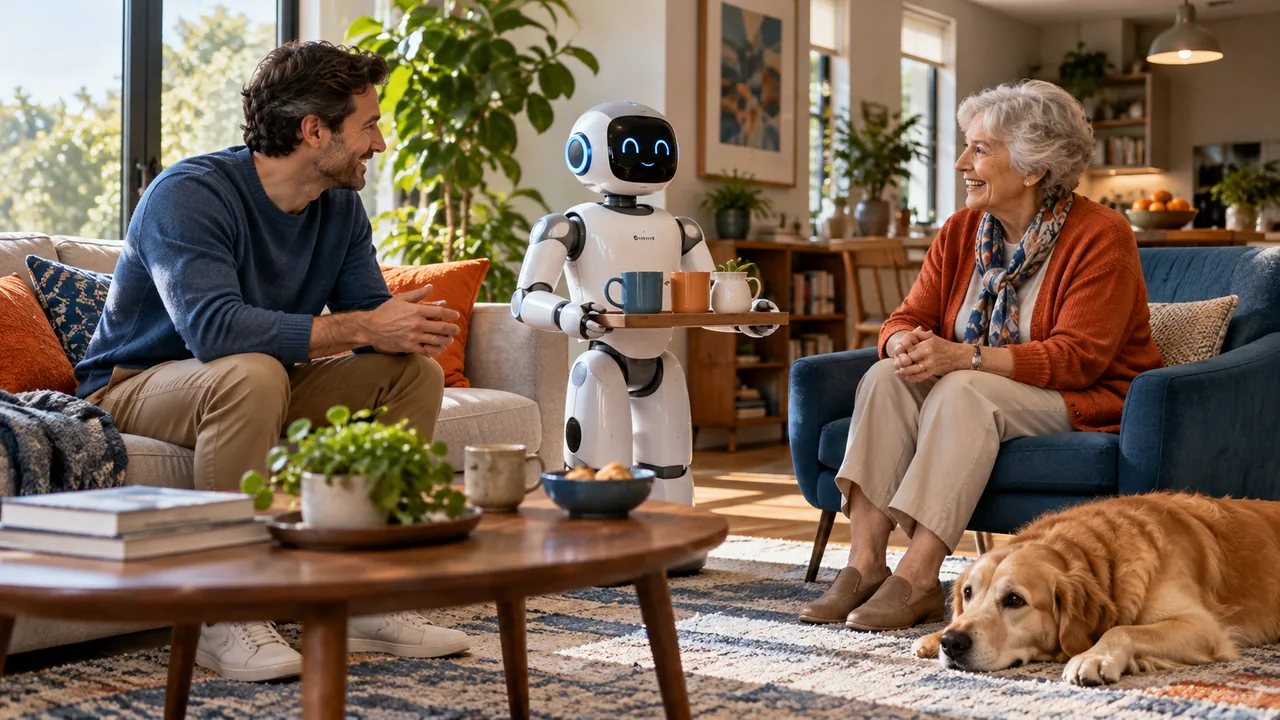
The 90-centimetre robot focuses more on companionship and education than housework. Its actual usefulness will depend less on its appearance than on reliability and privacy rules.
A commercial presentation is not a delivered product
AiMOGA says Mobo has 22 degrees of freedom, spatial perception, object recognition, obstacle avoidance and a memory of family preferences. These are manufacturer claims.
Opening pre-orders proves neither immediate delivery nor autonomous success with tasks in a real home. Public information does not yet provide a sufficiently precise price and timetable for assessing a purchase.
Family memory is also a database
A companion that recognises people, listens to conversations and remembers habits can be convenient. It also collects intimate information about schedules, children and health.
Users should know whether data remains on the device, goes to the cloud, trains models and how long it is retained. An offline mode, clear indicators and simple deletion should be central criteria.
Presence does not replace a relationship
Reminders and educational activities may support a family. They should not be presented as a substitute for a relative, educator or healthcare professional.
A meaningful test lasts several weeks: understanding instructions, errors, interruptions, battery life and children’s reactions. People who are filmed or recorded must retain the ability to consent.
Conclusion
Mobo makes the arrival of social robots in commerce visible. Its value will depend on evidence of use and data guarantees, not on the promise of companionship alone.
Comments 0
Be the first to comment on this article.