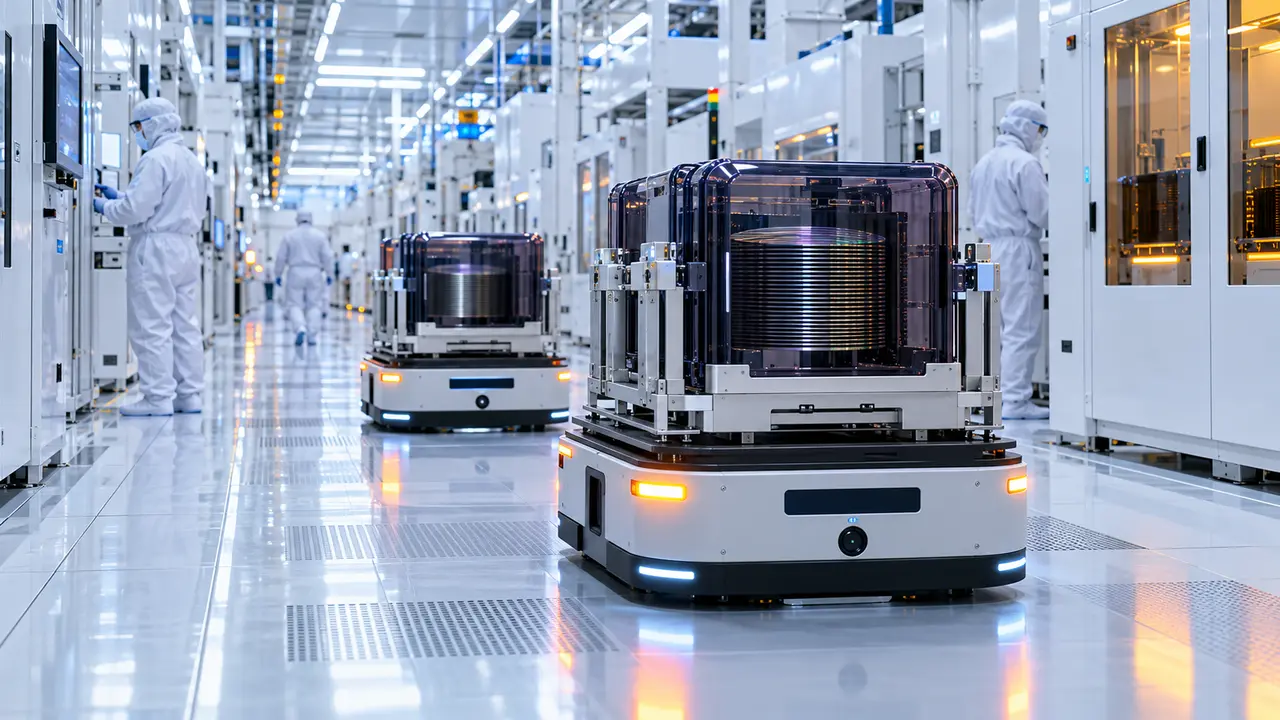
A semiconductor plant relies on spectacular lithography tools and on small driverless vehicles. On 22 October, the FCC granted Intel a one-year waiver for certain foreign equipment.
Old but indispensable robots
Intel has used the vehicles for more than two decades. It argued that replacement would take years and could disrupt US chip manufacturing. The FCC limited the exception to one year to avoid a sudden interruption.
Intel has used the vehicles for more than two decades. It argued that replacement would take years and could disrupt US chip manufacturing. The FCC limited the exception to one year to avoid a sudden interruption.
Intel has used the vehicles for more than two decades. It argued that replacement would take years and could disrupt US chip manufacturing. The FCC limited the exception to one year to avoid a sudden interruption.
Cross-dependencies
AGVs are integrated with routes, safety systems, software and cleanroom procedures. Replacing them is not equivalent to buying ordinary warehouse carts. A credible domestic solution requires suppliers, reliability testing, parts and technicians.
AGVs are integrated with routes, safety systems, software and cleanroom procedures. Replacing them is not equivalent to buying ordinary warehouse carts. A credible domestic solution requires suppliers, reliability testing, parts and technicians.
Security, continuity and timing
The year should be used to assess security, test alternatives and build maintenance capacity. The waiver prevents a sudden disruption; it does not solve the underlying dependency.
The year should be used to assess security, test alternatives and build maintenance capacity. The waiver prevents a sudden disruption; it does not solve the underlying dependency.
Conclusion
The year should be used to assess security, test alternatives and build maintenance capacity. The waiver prevents a sudden disruption; it does not solve the underlying dependency.
Comments 0
Be the first to comment on this article.