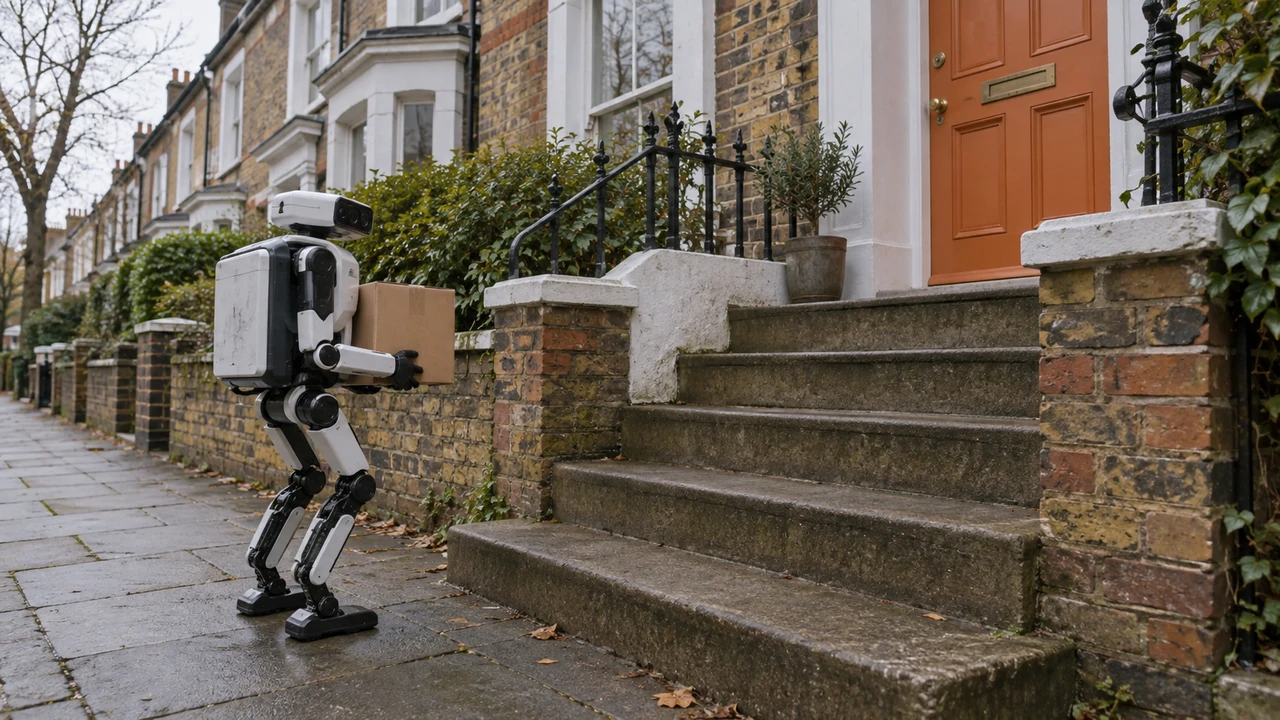
A staircase can bring a wheeled robot’s journey to an end. Evri is testing a different approach: a two-legged machine designed to negotiate obstacles between a delivery vehicle and a home.
The last mile becomes a robotics test ground
In a statement dated 28 September 2026, Evri announced a trial in Barnsley with Japan-based Refined Robotics. The project will assess the robot’s contribution to the existing delivery network. It is a trial, rather than a widespread rollout.
Legs to overcome the limits of wheels
According to Evri, the machine can carry up to 15 kilograms, travel at 6 km/h, climb stairs and cross uneven surfaces. It is also designed to enter and leave a delivery vehicle.
These specifications describe its advertised capabilities. They do not yet establish reliability across every situation on a delivery round.
Autonomy must be measured in real conditions
The company says the robot can operate autonomously or under remote supervision. The trial will examine its behaviour in residential neighbourhoods. TechRadar’s coverage also describes an experimental project.
Our analysis: the meaningful indicator will be the number of human interventions needed to complete a delivery. Climbing a step in a demonstration and finishing a round with varied access conditions are different challenges.
Implications for residents and couriers
The evaluation should also show how such a machine shares space with pedestrians and fits into couriers’ work. Its economic value will depend on the actual service provided, interruptions and maintenance.
Conclusion
The Barnsley trial asks a practical question: do legs provide enough flexibility to justify their complexity? Deliveries completed on real streets will provide the answer, beyond the advertised capabilities.
Comments 0
Be the first to comment on this article.