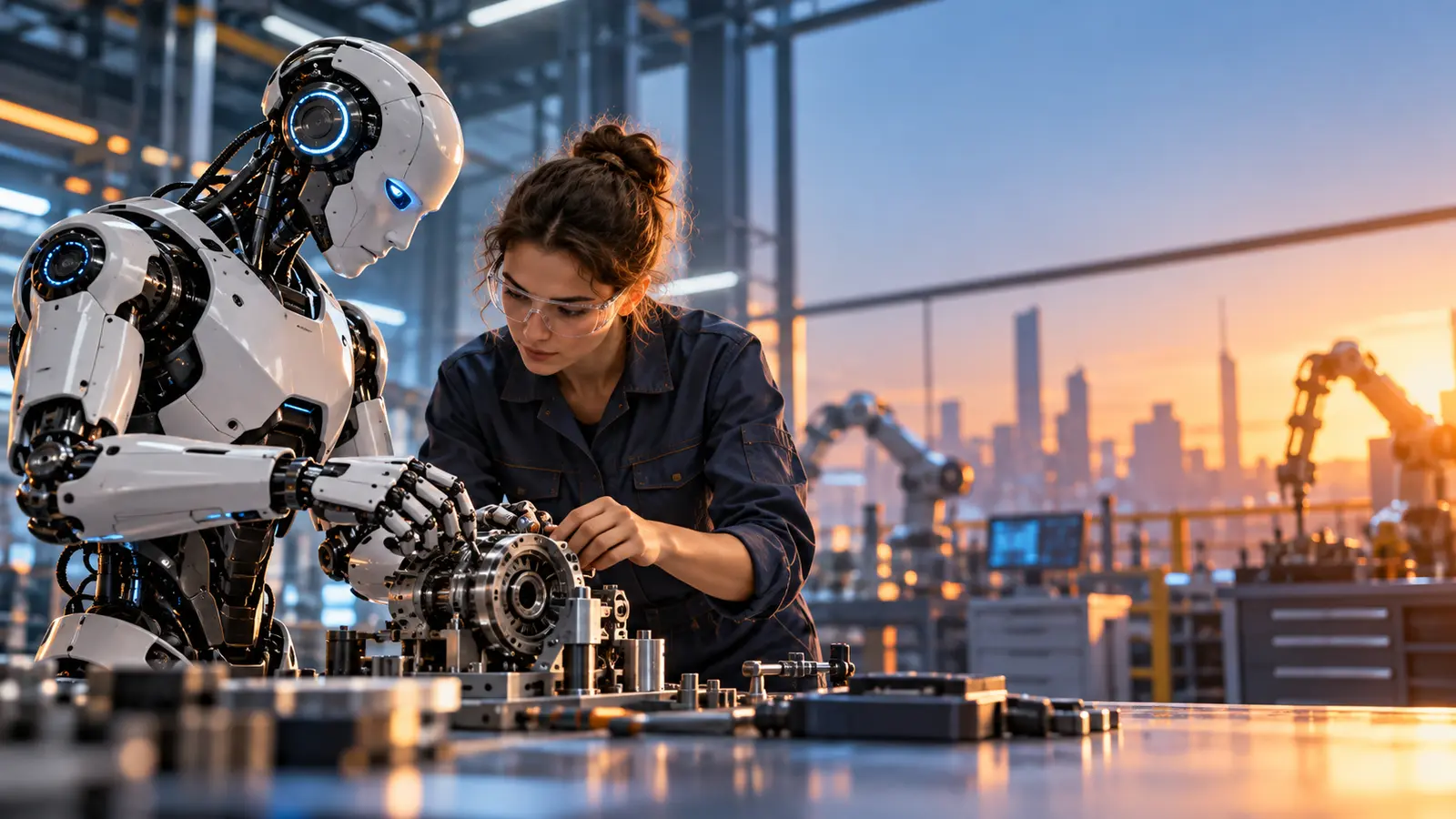
Rohit Prasad joins from Amazon, where he worked on Alexa and the Nova model family. Reuters confirmed the appointment. Boston Dynamics says it wants to commercialise intelligent robotic systems for industrial and professional environments. The appointment is a strategic signal, not a product announcement. It establishes no new price, broad deployment schedule or test result. Equating a leader’s expertise with a machine’s capability would erase the essential stages of development, evaluation and sustained use.
Moving from an answer to an action changes the requirements
An imperfect software answer can sometimes be corrected before use. A robot acts directly in the physical world. A misidentified object, an ambiguous instruction or an unusual situation can interrupt work or create risk.
A more adaptable AI must therefore be judged alongside its limits. A useful machine must recognise what it cannot do and let a team take over. Supervision, training and incident management are part of the service, even if they are less visible than a demonstration.
For workers, watch the task that changes
The debate cannot be reduced to a robot count. Automated inspection might reduce travel but require more data checking. Assisted handling could shift work towards preparation, control and maintenance.
These are scenarios, not results announced on 6 October. Progress should be measured through workload, interruptions, output quality and the resources needed to operate the system. Saving movements does not automatically save time.
Conclusion
Rohit Prasad’s appointment shows how central AI has become to robotics strategy. Users will need practical proof next: a system able to provide a regular, understandable and safe service. That continuity, more than the prestige of an announcement, could transform jobs.
Comments 0
Be the first to comment on this article.