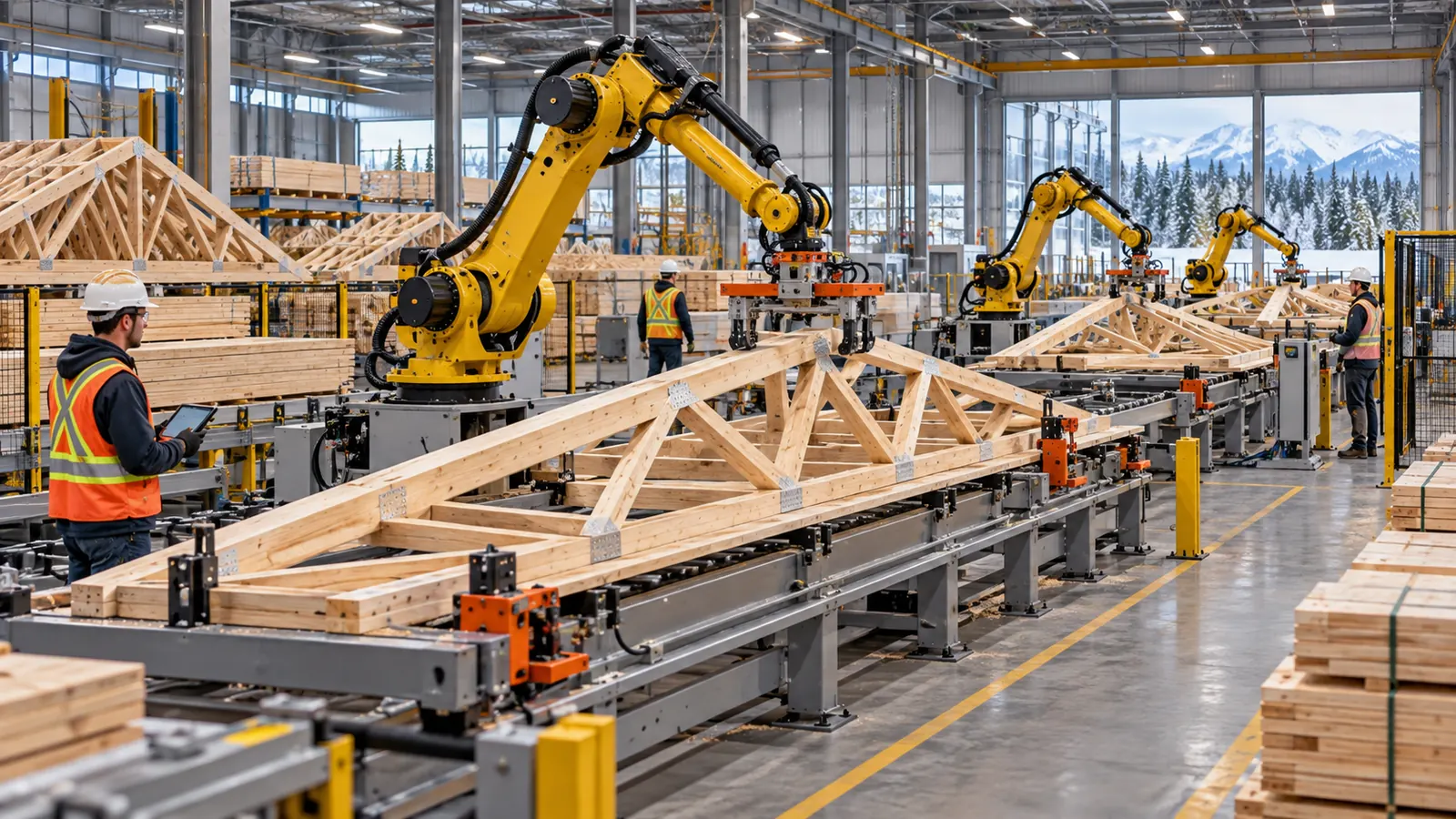
Building more homes requires more than drawing them faster. Their components also have to be manufactured and delivered. Atlas Engineered Products’ new installation targets that intermediate link. Its interest lies precisely in its practical nature: roofing components must leave the workshop and meet the needs of real construction sites.
A milestone reached, with ramp-up still to follow
The October 8 release distinguishes completion of commissioning from training and testing on runs intended to produce sellable components. This wording does not amount to a record of regular deliveries over several months. The description of the installation as a Canadian first remains attributed to the company.
The timeline matters. In August, Atlas was still giving forecast dates for completing commissioning and making initial shipments. October’s text provides a more recent progress update; summer forecasts must not be reused as evidence of deliveries already made.
The factory and construction site must advance together
A roof truss is a structural assembly designed to support a roof. The robotics here concern workshop manufacturing, not construction of an entire house. Our analysis: additional capacity becomes useful progress only if components arrive at the right time, in the right configuration and with controlled quality.
The challenge therefore also lies between stages: order preparation, checks, handling and coordination with building sites. Speeding up one operation could shift a wait to another. The announcement offers no independent assessment that would quantify this effect across the entire process.
Human work changes before it disappears
The training mentioned by Atlas is a reminder that installing a robot does not remove the need for skills. Our analysis: supervising a line, handling an incident and checking a component do not involve exactly the same actions as manual assembly. The transition can therefore require time and support.
It would be unjustified to infer a number of jobs replaced. OSHA also stresses that unusual phases of robot use deserve particular vigilance. This general prevention advice remains relevant during production ramp-up, without constituting a judgement on the safety of this specific installation.
A home’s price is not decided on a single line
For buyers, more consistent manufacturing is an appealing idea. But land, financing, organisation and other construction trades also contribute to the final cost. No percentage fall in house prices can be inferred from this announcement.
The results to follow will be more modest and more informative: consistent quality, continuity of production runs and fulfilment of orders. These are the measures on which robotics can build lasting industrial credibility.
Conclusion
Atlas’s new line shows how robotics is entering construction through a specialised task. The important step is not replacing a building site with a universal robot, but proving that automated manufacturing can fit into a functioning chain of work and delivery.

Comments 0
Be the first to comment on this article.