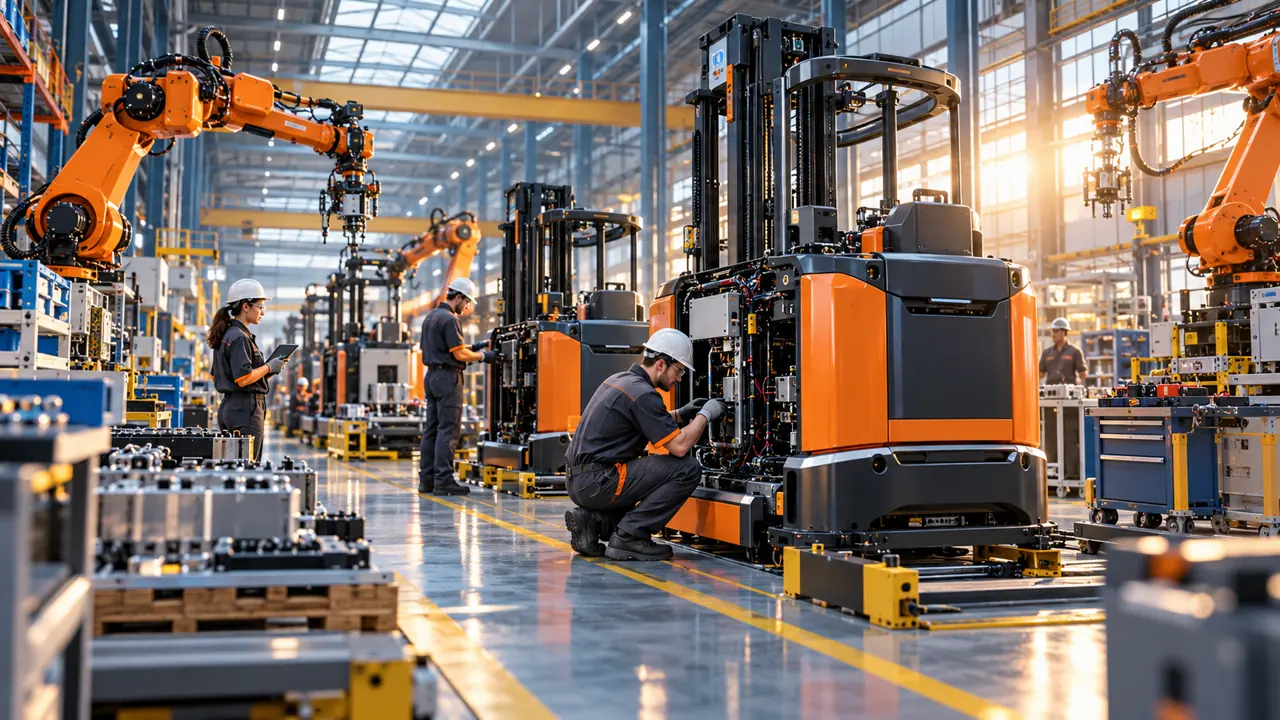
The future Greenwood site is expected to combine advanced fabrication, robotic welding, automated coating and assembly, supported by cloud and AI systems. It will supply Amazon’s North American fulfilment network. Investment, staffing and salary figures remain targets until the planned 2028 opening.
Building the machines that automate warehouses
Amazon says it has manufactured more than one million robots in the United States and deployed them at over 300 facilities. It estimates they assist employees with 75% of delivered orders.
Those company figures indicate scale, but do not by themselves measure productivity, safety or the net effect on employment.
Three hundred jobs, but different occupations
Amazon lists CNC operators, welders, technicians, assemblers, engineers and quality specialists, with average pay close to $100,000 a year.
Robotics could transform repetitive tasks and change demand for design, supervision and maintenance. The net employment effect will depend on jobs created or displaced and access to training.
Managing the skills transition
A warehouse operator does not automatically become a technician or engineer. Companies, technical schools and public authorities must make the transition accessible to existing workers.
Safety claims also require independent comparison. A robot may remove some lifting, while higher pace or poor workstation design can create other risks.
Conclusion
Robots are becoming a strategic capability manufactured at scale. For workers, the decisive question is who can gain access to the skills and better-paid roles created around these systems.


Comments 0
Be the first to comment on this article.