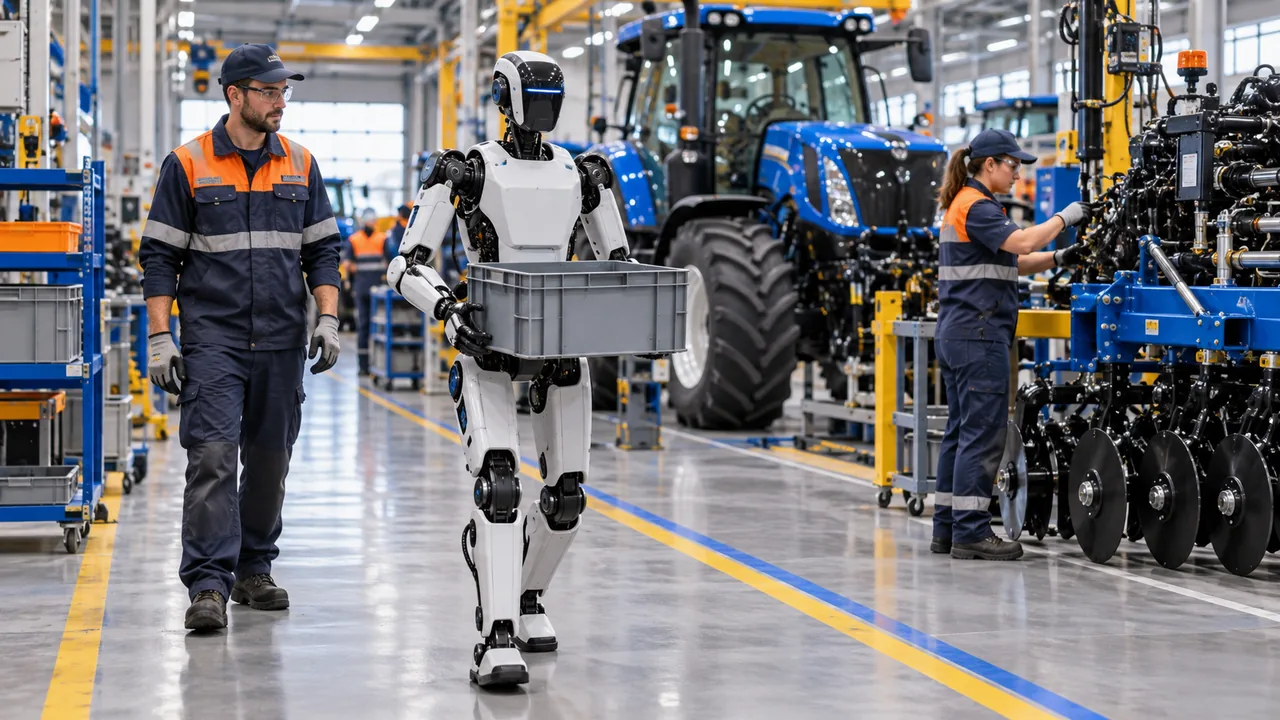
A commercial agreement gives the experiment more weight, but its schedule, tasks and actual performance will have to be observed on the factory floor.
A pilot, not a rollout
The 20 October release envisages a 2027 start at an agricultural machinery plant. Digit is designed to move through human spaces and handle totes. The agreement provides no production record, uptime rate or cost per task yet.
A contract, installation, trial and routine operation must therefore be kept distinct. Agility’s own cautions mention technical challenges, possible delays and commercial uncertainty.
Watch: meet the Digit 5 humanoid robot
Safety shapes the workstation
A biped working near operators must behave predictably after a lost connection, dropped object or human crossing. Prevention depends on speed and force limits, work zones, emergency stopping and training.
The workstation should be designed with employees. Moving physical strain elsewhere without addressing new supervision and maintenance duties would not be complete progress.
Digit at work: a logistics demonstration
Jobs are not only about replacement
The humanoid may handle repetitive travel while creating needs in integration, diagnostics and oversight. The net effect will depend on production volume and how AGCO reorganises its teams.
The indicators are concrete: incidents, human interventions, genuinely productive time, fatigue avoided and quality. A successful demonstration does not yet answer these questions.
Conclusion
The AGCO pilot will matter if it publishes field results and involves teams. For now, it is an announced experiment, not proof that humanoids have conquered the factory.

Comments 0
Be the first to comment on this article.