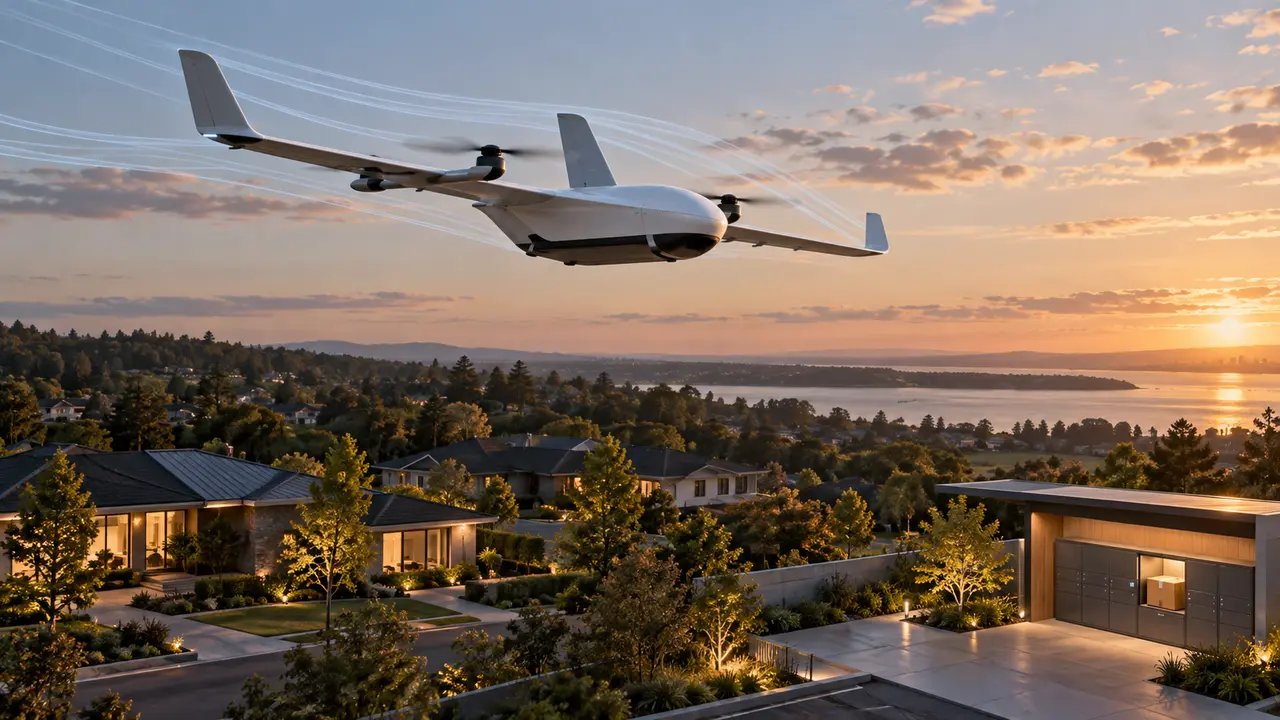
Drone delivery: Zipline says it has sharply reduced flight noise
Zipline claims 68% lower total sound exposure and a 24% reduction at peak compared with its 2025 fleet. These results come from company modelling, not independent acoustic certification.
Its fixed-wing aircraft switch off most motors in cruise. Software measures wind and chooses quieter transitions, using gravity and altitude rather than fighting the air.
Drone delivery: Zipline says it has sharply reduced flight noise — 2
Zipline also reports 53 seconds shorter average flights, about 50% more time on the wing and 21% less energy per flight. Noise is not only a peak: duration, cumulative exposure, tone, time and background levels matter.
A quieter aircraft may still disturb people if flights multiply.
Drone delivery: Zipline says it has sharply reduced flight noise — 3
Authorities should publish ground measurements and route frequencies. FAA documents provide earlier reference levels but do not validate the new percentages.
Conclusion
Treating noise as a flight-control variable is useful. Credibility now depends on independent, comparable measurements and transparent rules for routes, hours and cumulative exposure.
Comments 0
Be the first to comment on this article.