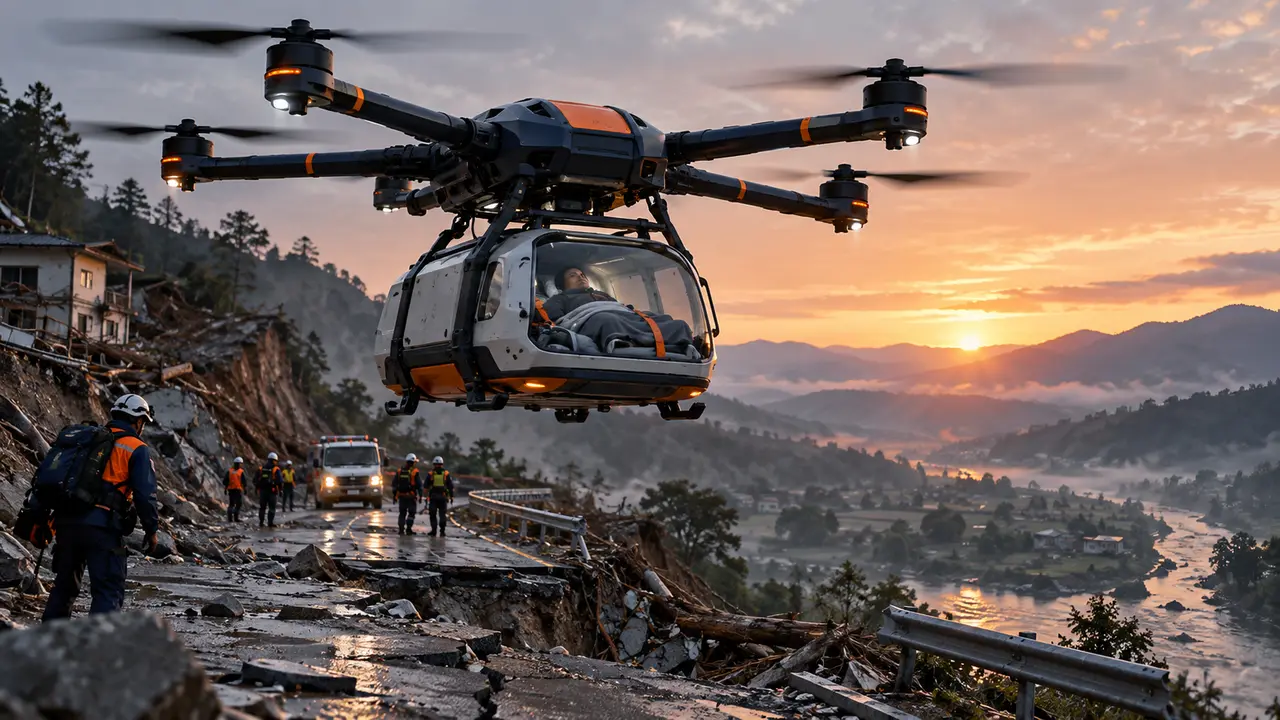
StarGate: the drone evacuating wounded people when roads are too dangerous
Two real evacuations have been reported. A roughly five-kilometre flight reportedly took under fifteen minutes, but two cases do not establish a success rate.
StarGate is built around a protected stretcher. SkyFall and AP report a payload of up to 150 kg, a top speed of 105 km/h and a one-way range near 15 km.
StarGate: the drone evacuating wounded people when roads are too dangerous — 2
The drone does not replace medical staff; it moves the casualty to a safer handover point. Medical transport must limit vibration, acceleration, cold, noise and stretcher movement, while providing monitoring and safe landing.
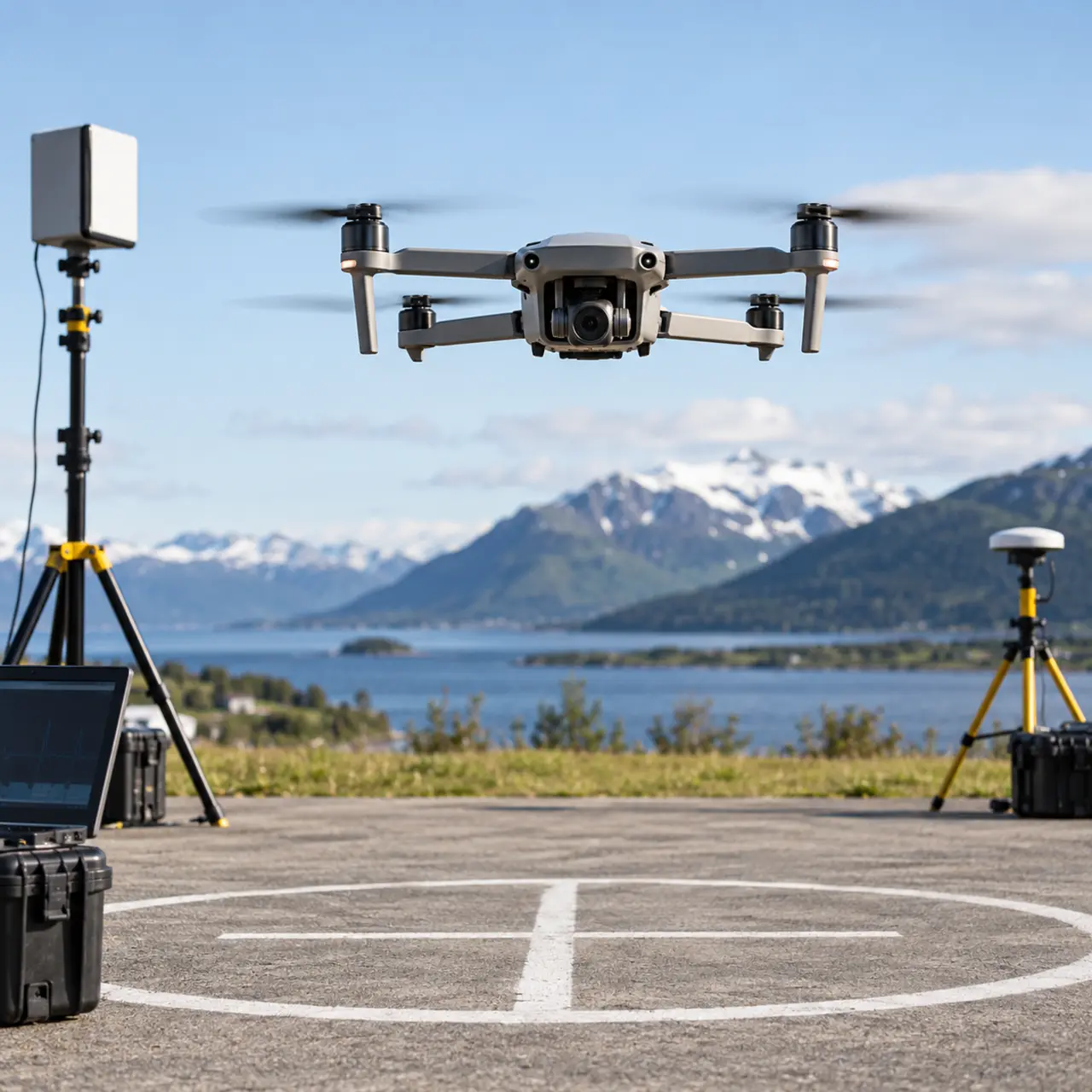
Public data do not yet assess these points under clinical protocols. The company also describes assisted navigation when links or GPS are degraded; NEO does not provide operational details.
StarGate: the drone evacuating wounded people when roads are too dangerous — 3
Civil use would require certification, air corridors, liability, medical procedures, maintenance and coordination with emergency services. A military prototype does not automatically become a civilian ambulance.
Conclusion
StarGate nevertheless shows that a heavy drone can become part of a survival chain. Early rescues make the idea credible, not yet proven at scale.
Comments 0
Be the first to comment on this article.