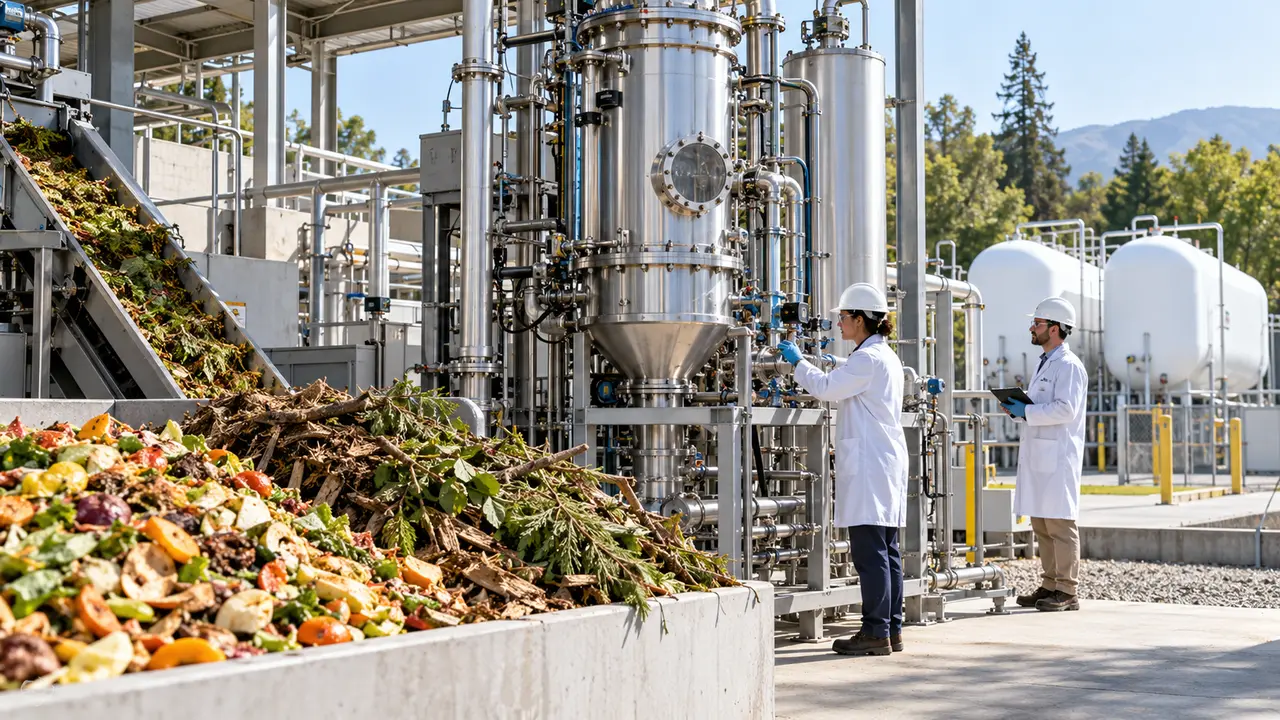
Campus waste becomes hydrogen: UCLA moves to a pilot — 1
Gasification heats biomass with controlled oxygen to make a gas that must be cleaned and processed to isolate hydrogen. UCLA says testing has continued since April, targeting waste reduction, energy production and carbon removal. Mote provides the process while the university studies catalysts, systems engineering and sustainability.
Campus waste becomes hydrogen: UCLA moves to a pilot — 2
The team estimates that roughly seven tons of daily food and plant waste could support hydrogen equivalent to about 2% of campus electricity, several hundred peak-demand hours, or around 100 hydrogen vehicles. These are estimates, not measured annual production. No full efficiency, cost per kilogram, availability or life-cycle assessment has yet been published.
Campus waste becomes hydrogen: UCLA moves to a pilot — 3
Sorting, drying and transport consume energy. Carbon capture and permanent storage require infrastructure, and feedstock quality varies. The concept makes most sense where concentrated waste and a nearby hydrogen use already exist.
Conclusion
UCLA has not solved hydrogen economics. It has built a pilot-scale test bed whose value will be turning promises into comparable data: tons processed, useful hydrogen, carbon removed, cost and availability.



Comments 0
Be the first to comment on this article.