Forecasting activity, not reading the future
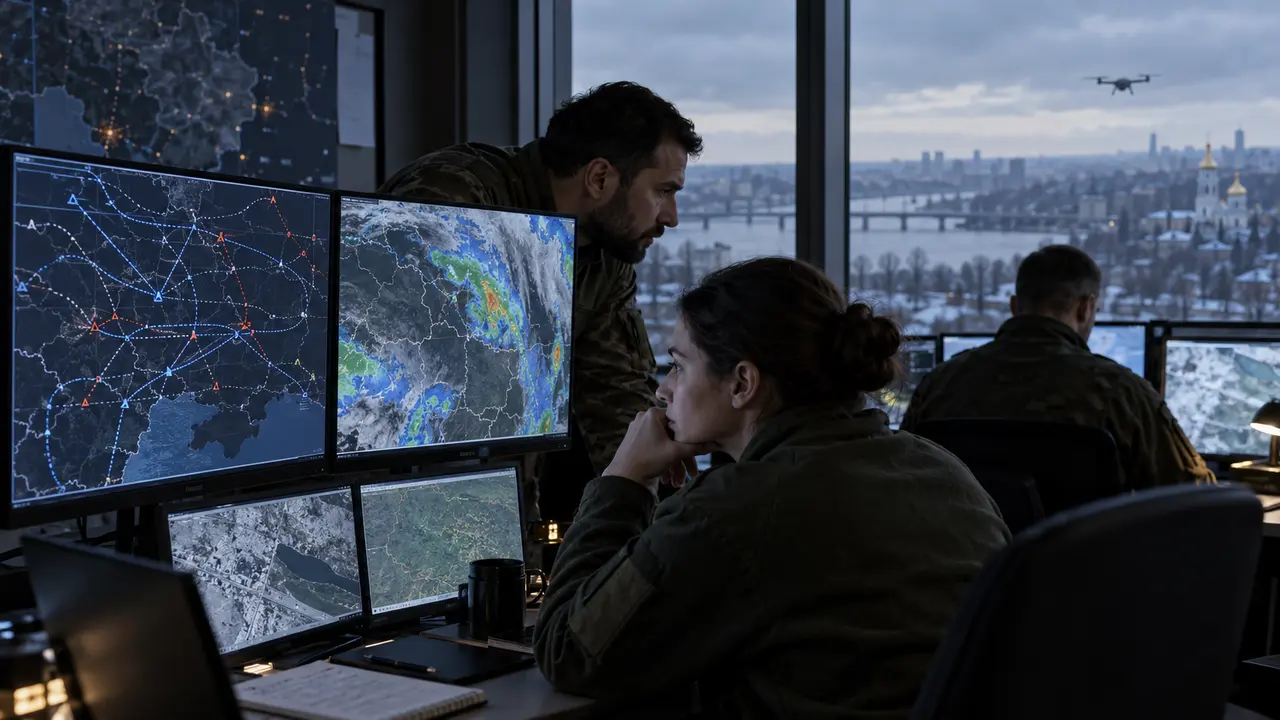
The model analyses several signal families to estimate the likely intensity, area, timing and type of drone activity. Ukraine’s Defence Ministry and JATEC say it was refined with operational data. They have not published a full error rate, an independent comparison or its behaviour against an adversary that deliberately changes methods. That distinction is central. A probability map can help allocate attention and protection resources, but it can also produce false positives, miss a tactical shift or reproduce bias in its data.
A decision-support tool under human responsibility
The initiative also includes a second prototype intended to compare planning options. NEO provides no operational detail that would enable these uses to be reproduced. The journalistic issue is governance: what data feed the model, how is an alert verified, and who remains accountable for a decision taken after an algorithmic recommendation? The project also illustrates the convergence of wartime data, industrial cooperation and Alliance standards. A model that works in one conflict does not automatically transfer to another theatre.
Consequences beyond the front line
In a civilian setting, similar methods could help identify abnormal trajectories around airports, power plants or major events. Extending such systems nevertheless raises questions about surveillance, data sovereignty and democratic oversight.
Conclusion
AI does not remove the uncertainty of war; it turns it into probabilities that can be used more quickly. The model’s real value will depend on continuous testing, human supervision and the ability to recognise when current data no longer resemble the past.



Comments 0
Be the first to comment on this article.