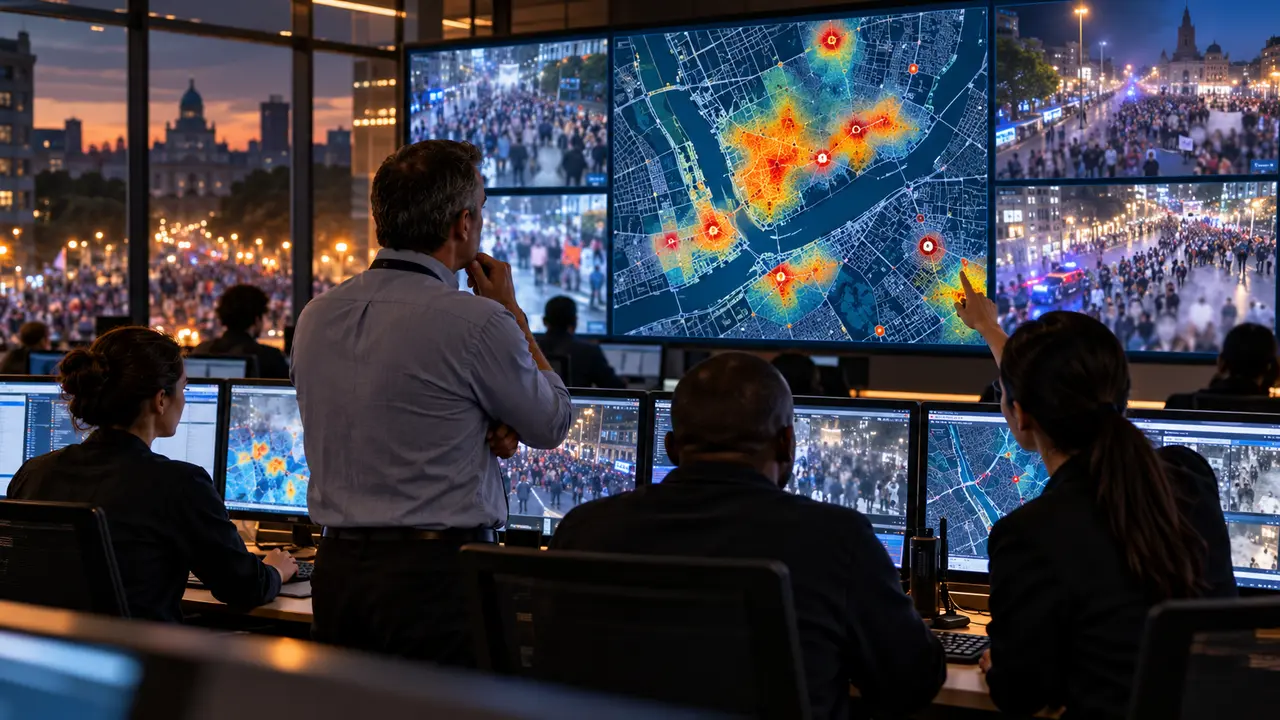
A camera sees a square filling up. A model can compare flows and warn that an exit is blocked. That may help organizers and emergency services, but proves neither violent intent nor identity.
Detect a situation, do not judge a person
Counting silhouettes, detecting smoke or collective running differs fundamentally from recognizing a face. The first functions can open an emergency corridor. The second directly affects public freedoms.
Shadows, umbrellas, clothing and dense crowds create errors. An alert is a lead to verify, never proof.
European law creates barriers
The EU AI Act tightly restricts real-time remote biometric identification in public spaces for law enforcement, with limited exceptions and authorization conditions. Technical availability is not a legal basis.
Disproportionate surveillance may discourage lawful protest. Purpose, area, duration, bias tests, public information and avenues for challenge must be documented.
Useful AI must be auditable
A defensible system shows uncertainty, records decisions and separates crowd-management data from investigative files. A trained operator reviews and may reject an alert.
AI may speed up detection of congestion or smoke; it becomes dangerous when visual correlation becomes individual suspicion.
Conclusion
The best AI protects without cataloguing: collective alerts, data minimization, human oversight and no automated adverse decision.

Comments 0
Be the first to comment on this article.