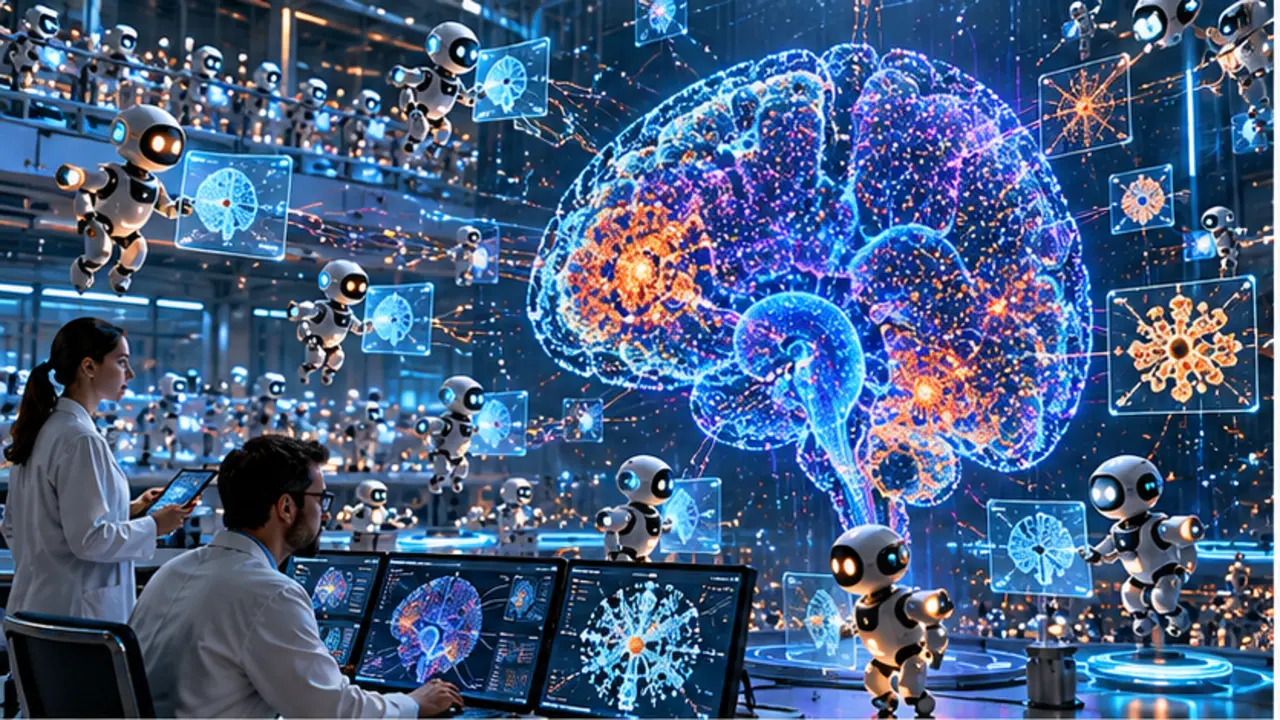
Modern biology produces more data than human teams can inspect line by line. On October 21, OpenAI described work on a whole-brain CRISPR atlas. Each GPT-Rosalind-powered agent studied one gene disruption, examined cellular responses, searched the literature and proposed an explanation. The findings were combined into a map linking genes, cells and publications.
A problem of abundance, not scarcity
The reported 32 minutes cover computation on existing data, not animal preparation, experimentation or validation.
Connections related to Alzheimer’s and Parkinson’s may guide research, but they do not show that a drug works.
Thirty-two minutes do not replace years of validation
The paper is a preprint and its results need peer review, independent reproduction and laboratory testing. Signals may reflect bias, misread papers or mouse-specific biology.
The practical advance is the division of work: many agents handle narrow questions in parallel, while scientists review ranked leads, references and contradictions.
A new division of scientific work
This could accelerate genomics, rare-disease research and drug studies, provided teams keep audit trails, measure false positives, protect sensitive data and retain human responsibility.
This could accelerate genomics, rare-disease research and drug studies, provided teams keep audit trails, measure false positives, protect sensitive data and retain human responsibility.
The next step is in the laboratory
This could accelerate genomics, rare-disease research and drug studies, provided teams keep audit trails, measure false positives, protect sensitive data and retain human responsibility.
Conclusion
AI may expand scientific attention, but it has not discovered a cure in 32 minutes. It has proposed a faster way to identify questions worth testing.



Comments 0
Be the first to comment on this article.