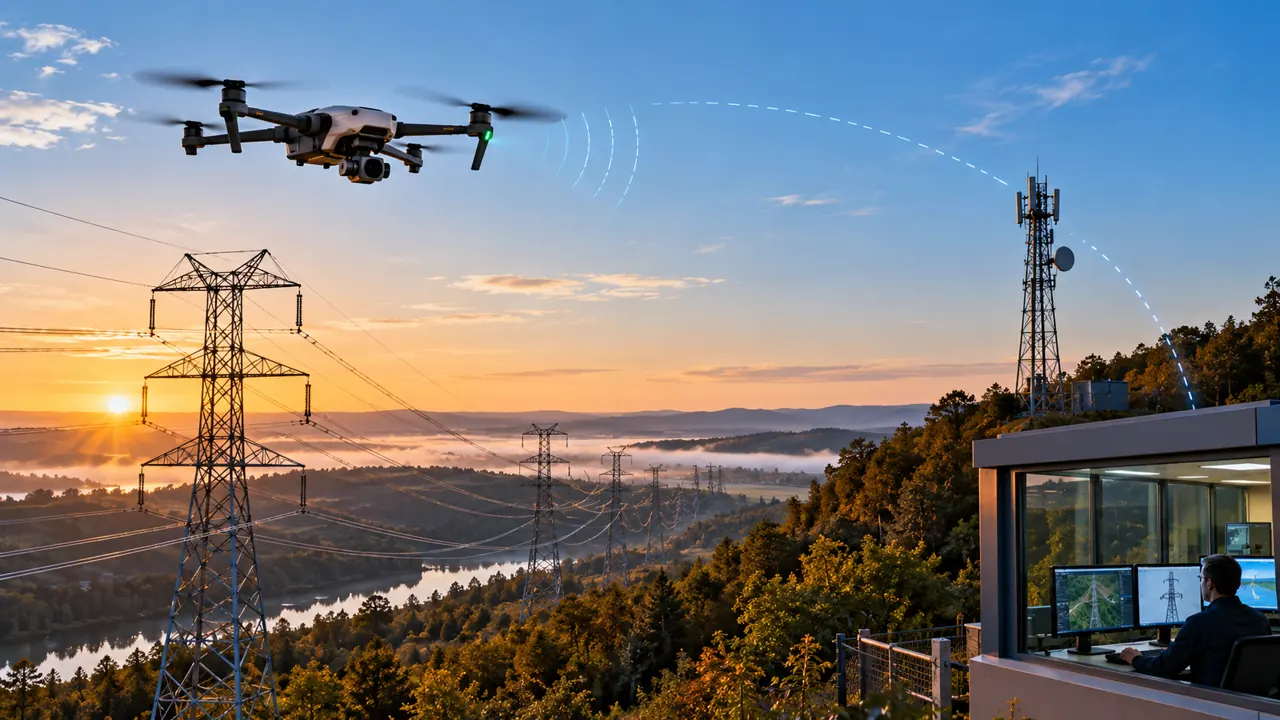
A drone relies on more than motors, batteries and sensors. It also needs a robust command, control and data link. Radio spectrum is shared among many services; a congested or unsuitable frequency can limit useful range and complicate beyond-visual-line-of-sight operations.
The radio network: drones’ overlooked infrastructure
The FCC proposal concerns 50 MHz of already licensed spectrum in the 800 MHz Cellular band, lifting an existing restriction on drone use.
Better-suited infrastructure could support network inspections, post-disaster mapping, certain deliveries, farming and emergency missions.
A proposal, not yet a right to transmit
The text published on 8 October is a regulatory step. It does not let every operator use the frequencies immediately, and final parameters may change.
Spectrum policy must also align with FAA aviation rules. A strong radio link never replaces flight authorisation, safety procedures or privacy protection.
An international signal, not a global rule
US decisions can influence manufacturers and standards, but do not apply in Europe. Equipment designed for the US cannot automatically use the same bands elsewhere.
Compatible equipment and networks will be needed and costs absorbed. Smaller operators may move more slowly than groups with testing and certification resources.
Conclusion
The future of drones depends as much on invisible infrastructure as on aircraft. The reform must be judged by its final rules, protection of other radio services and coordination with aviation safety.
Comments 0
Be the first to comment on this article.