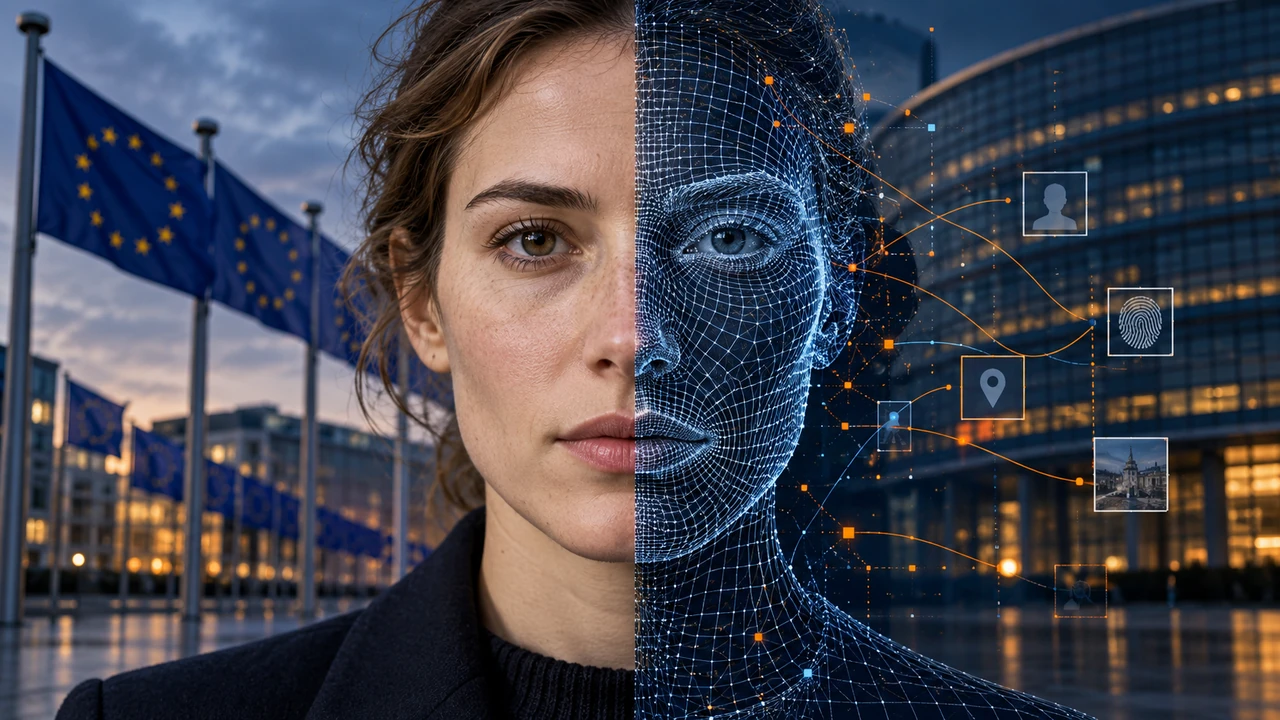
AI capabilities are advancing faster than the public’s ability to distinguish authentic content from automated production. The European Union is responding with specific information and labelling requirements.
A new stage of the AI Act
Article 50 of the EU AI Act has applied since 2 August 2026, supported by Commission guidance intended to harmonise interpretation.
Providers must clearly inform people when they interact directly with AI unless it is obvious, and certain generated or manipulated content must be technically identifiable.
Deepfakes directly affected
Synthetic images, voices and videos have legitimate uses but also make impersonation and disinformation easier.
Disclosure rules therefore apply to artificial content likely to appear authentic, with adaptations for artistic, satirical and editorial contexts.
Labelling will not be infallible
Metadata and technical signatures can help platforms identify generated content, but recompression, cropping or removal can weaken them.
Transparency will therefore combine technical marking, visible notices, platform controls and public education.
What changes for companies
AI providers must identify affected functions, adapt interfaces and document identification mechanisms.
Distributors of synthetic content must assess their duties; media must distinguish generated illustration, documentary photography and altered imagery.
Conclusion
The EU is not banning AI-generated content; it wants its origin to be understandable.
Success will depend on robust standards, compliance by international actors and effective enforcement.



Comments 0
Be the first to comment on this article.