
A manageable fire can become uncontrollable in hours. A study released on 16 September 2026 proposes distributed stations and autonomous drones to reduce detection delays. Its figures describe a simulation, not an already deployed fleet.
A model evaluated on 3,693 ignitions
Romain Puech, Danique de Moor, Ana Trišović and Dimitris Bertsimas evaluated their model using 3,693 California ignitions from 2021 to 2024.
Under the assumptions used, a $100 million budget over a five-year horizon would detect 97.3% of the events studied, about 74% within the first hour. These figures are neither image-recognition accuracy nor the percentage of fires extinguished.
Coverage matters as much as routing
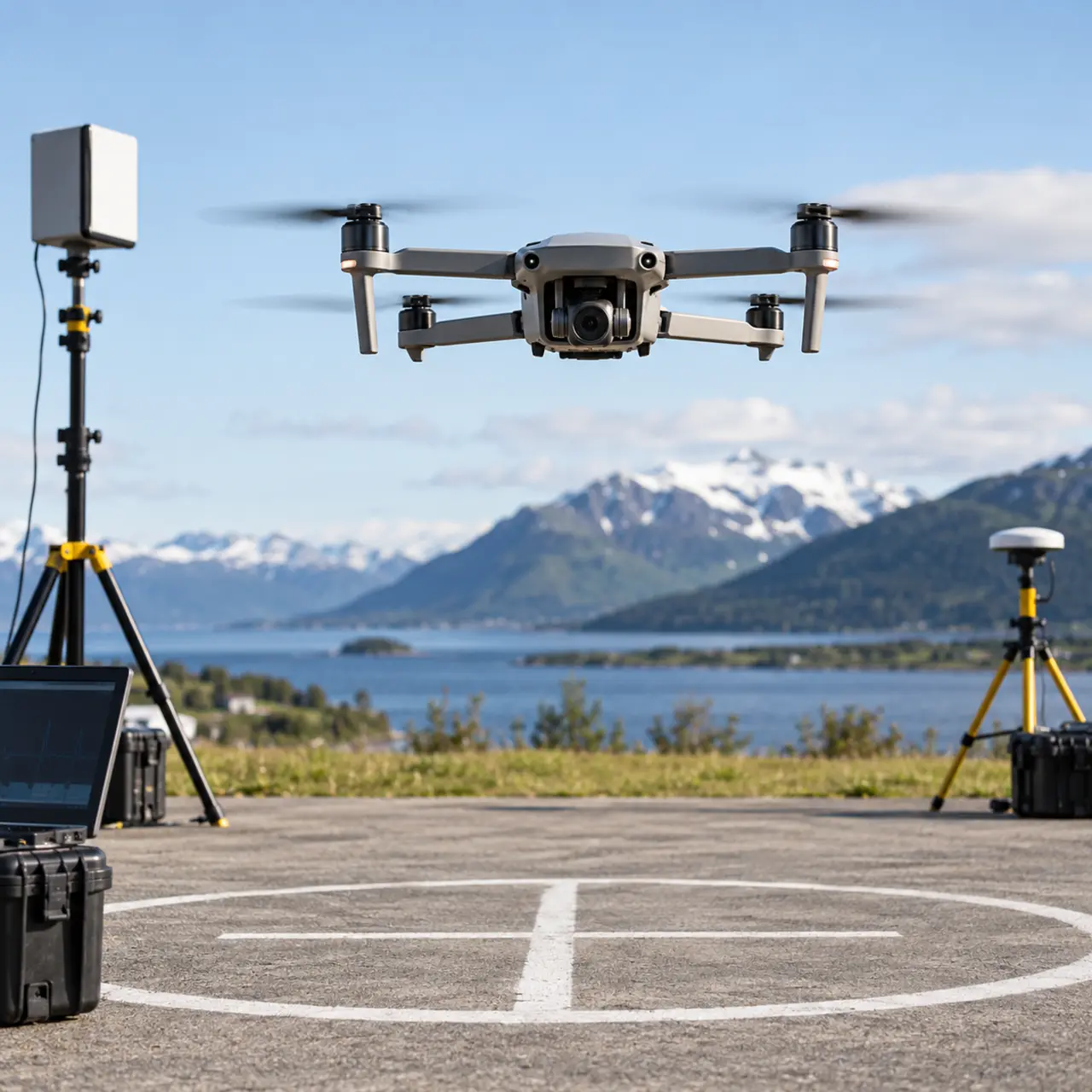
The model combines station placement, charging, battery endurance, communications range and patrol organisation to find coherent coverage within the budget.
Station locations mainly determine which fires are reachable. Routing then affects how quickly a drone gets near them. Buying more aircraft alone is insufficient; location and availability matter.
An important detection assumption
The study treats a fire as detected when a drone gets close enough. It therefore does not reproduce every sensing or recognition error in smoke, cloud or complex terrain.
This preprint is not an operational assessment of a California-wide service. Results depend on historical data and cost and operating assumptions. Field trials must measure false alerts, failures, weather effects and airspace restrictions.
Complementing satellites and lookout systems
Drones can approach suspicious areas and provide detailed imagery. Their value would be to complement satellites, fixed cameras, ground sensors and reports from people.
Spread over five years, the studied budget represents around $20 million annually. That is an order of magnitude for the scenario, not a guaranteed comprehensive quotation for a real service. Operational evaluation must also consider supervision and actual spending.
Conclusion
The research quantifies the potential of distributed aerial monitoring. The next step is testing the model across several seasons and checking whether earlier alerts genuinely help emergency crews respond.
Comments 0
Be the first to comment on this article.