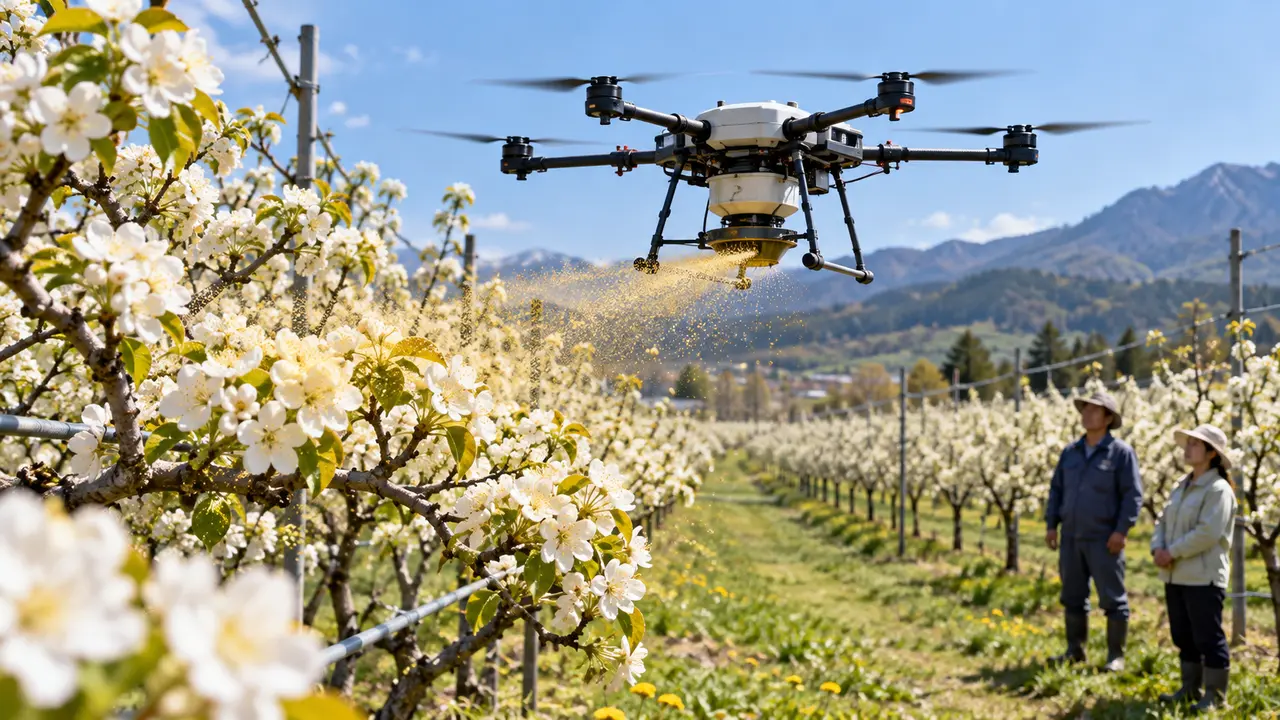
Drones pollinate pear trees with fruit set comparable to manual work
The system combines AI flower detection, RTK-GNSS navigation and electrically charged pollen spray. Japanese pear varieties are often self-incompatible, so compatible pollen must come from other trees, insects or manual application.
Researchers compared electrostatic drone pollination, an uncharged drone, manual feather brushing and natural pollination.
Drones pollinate pear trees with fruit set comparable to manual work — 2
The charged treatment achieved fruit set close to manual work, with a reported operating time of 9.3 seconds per metre and lower pollen consumption. Fruit set is not the same as final commercial yield, size, taste or storage life.
Multi-season and multi-orchard validation is still needed. Deployment must also consider wind, workers and insects.
Drones pollinate pear trees with fruit set comparable to manual work — 3
NEO provides no construction or voltage-setting instructions.
Conclusion
A drone may complement scarce labour but should not replace natural pollinators or habitat. The next proof is economic and ecological: several seasons, different orchards and transparent assessment of biodiversity effects.
Comments 0
Be the first to comment on this article.